

Deciding to seek help for alcohol or drug use is one of the most meaningful steps a person can take toward lasting change. Understanding the difference between inpatient and outpatient rehab can help you move forward with clarity and find the level of care that genuinely fits your life.
What Is Inpatient Rehab?
Inpatient alcohol treatment, also called residential treatment, means living full-time at a licensed facility for the duration of your program. You receive 24-hour medical care, structured daily programming, and a safe environment that removes outside distractions and triggers entirely.
Inpatient alcohol treatment provides 24-hour medical supervision and residential care in a structured facility, while outpatient treatment allows individuals to live at home and attend scheduled therapy sessions throughout the week. Inpatient care is typically recommended for severe alcohol use disorder, high withdrawal risk, or unstable home environments, while outpatient programs such as PHP and IOP are appropriate for mild to moderate severity with adequate support at home. Both approaches use evidence-based therapies and can produce lasting recovery outcomes when matched correctly to a person’s clinical needs.
What to Expect During Inpatient Care
Most inpatient programs begin with a comprehensive clinical assessment to determine the right treatment approach for your specific situation. If medical detoxification is necessary, it is completed under physician supervision before structured therapy begins.
Daily programming typically includes individual therapy, group counseling, medication management, family sessions, and evidence-based modalities such as Cognitive Behavioral Therapy (CBT) and Dialectical Behavior Therapy (DBT). Programs commonly run between 30 and 90 days, with length determined by clinical progress and individual need.
Who Benefits Most from Inpatient Treatment?
People who drink daily, have experienced severe withdrawal symptoms such as seizures or delirium tremens, or have been unable to maintain sobriety through prior outpatient attempts often need the intensive support inpatient care provides. Inpatient treatment is also appropriate when the home environment includes ongoing access to alcohol, unstable relationships, or limited personal support.
Individuals managing co-occurring conditions such as depression, anxiety, PTSD, or bipolar disorder may also benefit from a residential setting, where psychiatric services and around-the-clock monitoring are integrated into daily care. The structure of inpatient treatment removes the burden of everyday decision-making so you can focus entirely on healing.

What Is Outpatient Rehab?
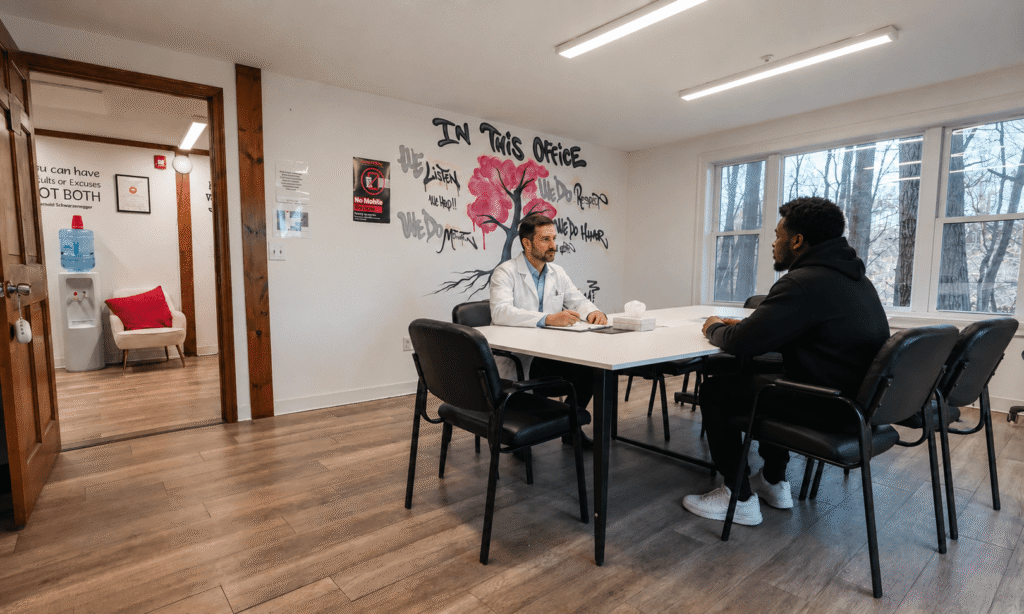
Outpatient alcohol treatment allows you to live at home while attending scheduled therapy sessions throughout the week. This model works well for individuals with a stable home environment, mild to moderate alcohol use disorder, or those stepping down from a higher level of care after completing inpatient treatment.
Outpatient care is not a single program. There are three distinct levels, each offering a different degree of structure and clinical intensity.
Partial Hospitalization Program (PHP)
A Partial Hospitalization Program (PHP) is the most intensive outpatient option, providing four to eight hours of structured programming most days of the week. PHP is the appropriate step-down after inpatient treatment or the right starting point for individuals who need daily clinical structure without an overnight residential stay.
PHP participants attend group therapy, individual counseling, psychiatric services, and medication-assisted treatment (MAT) during the day, then return home each evening. This level of care bridges the gap between residential and standard outpatient settings in a meaningful way.

Intensive Outpatient Program (IOP)
An Intensive Outpatient Program (IOP) provides nine to 20 hours of treatment per week, typically spread across three to five days. IOP is well suited for individuals who need consistent clinical support while maintaining work, school, or family responsibilities.
Evening and weekend scheduling makes it possible to attend IOP without disrupting your career or personal life. Evidence-based therapies, group peer support, and relapse prevention planning are core components of every session.
Standard Outpatient Care
Standard outpatient care involves attending one to three sessions per week and is best suited for individuals who have completed a higher level of care and need ongoing support to maintain their recovery. This level functions more like continuing care than primary treatment.
Sessions typically include individual therapy, counselor check-ins, and participation in recovery-focused group programming. Standard outpatient care provides connection and accountability without requiring a significant weekly time commitment.
Inpatient vs. Outpatient Rehab: Key Differences Side by Side
| Inpatient Treatment | Outpatient Treatment | |
|---|---|---|
| Setting | Live at the facility full-time | Live at home, attend scheduled sessions |
| Supervision | 24/7 medical and clinical staff on site | Session-based support |
| Best For | Severe alcohol use disorder, complex withdrawal | Mild to moderate severity, strong home support |
| Flexibility | Limited during treatment | High: evenings and weekends available |
| Cost | Higher (includes housing, meals, medical monitoring) | Lower, no overnight stay required |
| Duration | 30 to 90 days | Several weeks to several months |
| Trigger Exposure | Removed from outside environment entirely | Requires managing real-world exposure daily |
Confidential next step
Not sure which level of care fits?
A confidential assessment can help clarify whether outpatient treatment, detox placement, or a higher level of care may be appropriate. Verify your insurance or speak with the admissions team about your next step.
Does This Comparison Apply to Drug Treatment Too?
Yes. The same core questions apply when comparing inpatient and outpatient care for drug use: withdrawal risk, mental health needs, safety at home, prior treatment history, and the amount of daily structure someone needs. Withdrawal risks vary by substance, and some people need medical detox before either outpatient or residential treatment. Heartfelt coordinates detox placement when it is clinically appropriate before a transition into PHP, IOP, or outpatient care.
Both forms of care use evidence-based therapies such as CBT, DBT, and MAT. The central distinction lies in the level of supervision, physical structure, and separation from daily life that each setting provides.
Comparing Success Rates: What the Research Shows
Research consistently shows that both inpatient and outpatient alcohol treatment can produce meaningful, lasting outcomes when matched correctly to a person’s clinical needs. According to the National Institute on Drug Abuse, no single treatment approach works for every individual, and matching treatment type to clinical severity is one of the most important factors in long-term success.
A review published through the Canadian Agency for Drugs and Technologies in Health found that high-severity drinkers showed significantly greater reductions in alcohol use after inpatient treatment compared to outpatient care alone. A separate analysis found that individuals in outpatient programs have higher drop-out rates, ranging from 23 to 50 percent, compared to 17 to 57 percent in inpatient settings, suggesting that greater structure can support treatment completion for those who need it.
Outpatient care has also shown strong outcomes in clinical research. One randomized controlled trial found that outpatient treatment produced better overall abstinence rates when the individual had adequate home support and was clinically appropriate for that level of care.
The takeaway is straightforward: the best treatment is the one that fits your current clinical situation. A thorough intake assessment from a licensed clinician is the most reliable way to determine which level of care gives you the strongest foundation for lasting recovery.
Cost of Inpatient vs. Outpatient Rehab
Cost is a significant consideration for many people weighing treatment options. Inpatient treatment typically costs more because it includes housing, meals, around-the-clock medical staffing, and a full schedule of daily programming. Costs can range from roughly $2,000 for basic inpatient services to $40,000 or more per month at comprehensive residential facilities when insurance does not apply.
Outpatient treatment is considerably more affordable. Many PHP and IOP programs cost a fraction of residential care, and standard outpatient sessions carry the lowest per-session cost of any formal treatment setting.
Most major insurance carriers, including BCBS, Cigna, Aetna, and United Healthcare, are required to cover both inpatient and outpatient alcohol treatment under the Mental Health Parity and Addiction Equity Act of 2008. At Heartfelt Recovery Centers, our team verifies your insurance benefits before your first appointment so you understand your coverage before making any decisions.
How to Choose the Right Level of Care in New Hampshire
Choosing between inpatient and outpatient treatment is not a measure of how serious your situation is. Both options represent genuine commitment to recovery, and the right choice depends on your current health, your history with alcohol, and the stability of your support system.
A licensed clinician uses standardized assessment criteria, including the ASAM Criteria, to match you to the level of care your situation calls for. This process considers your physical health, withdrawal risk, mental health history, home environment, and any prior treatment experience. SAMHSA’s national treatment guidance outlines what to expect from this assessment process, and you can learn more at FindTreatment.gov.
Signs You May Need Inpatient Treatment
If you drink daily or experience physical symptoms when you stop, such as tremors, sweating, or anxiety, medical supervision during withdrawal is a priority. A history of seizures related to alcohol, multiple outpatient treatment attempts without sustained success, or active suicidal ideation all point toward a higher level of care.
People living in environments where alcohol is regularly present, or where relationships are volatile, also benefit from the physical boundary that residential treatment creates. Removing yourself from a triggering environment in the earliest weeks of recovery can dramatically increase the likelihood of completing treatment.
Signs Outpatient Treatment May Be the Right Fit
If you have a stable home environment, consistent social support, and mild to moderate alcohol use, outpatient treatment offers a clinically sound and flexible pathway to recovery. Outpatient care is also a strong fit for working professionals, caregivers, and anyone who needs evening or weekend scheduling.
Many people at Heartfelt Recovery Centers begin with PHP or IOP and achieve lasting recovery without ever requiring a residential placement. Our programs are built around the reality that your life does not pause while you heal.
The Role of Dual Diagnosis in Your Treatment Decision
A significant number of people seeking help for alcohol use disorder also live with co-occurring mental health conditions, including depression, anxiety, PTSD, or trauma histories that have never been properly addressed. If this applies to you, integrated dual diagnosis treatment is not optional, it is essential.
Treating only the alcohol use while leaving an underlying mental health condition unaddressed significantly increases relapse risk. Heartfelt Recovery Centers specializes in integrated co-occurring disorder care, meaning both conditions are assessed and treated simultaneously by the same clinical team.
From Inpatient to Outpatient: Step-Down Care and the Continuum of Recovery
Recovery is not a single event. It is an ongoing process that unfolds across different levels of care as your needs change over time.
Many individuals begin with inpatient or PHP-level care, then step down to IOP as stability increases and recovery skills develop. This continuum ensures that the clinical intensity of your treatment matches where you actually are in recovery, rather than withdrawing support too early.
Aftercare services, including alumni programming, recovery coaching, and ongoing individual therapy, provide the continued connection that research consistently identifies as protective against relapse. At Heartfelt Recovery Centers, discharge planning begins early in treatment so your next step is clearly defined before you take it.
Outpatient Drug & Alcohol Treatment at Heartfelt Recovery Centers in Hudson, NH
Heartfelt Recovery Centers is a Joint Commission accredited treatment facility located at 41 Sagamore Park Road in Hudson, New Hampshire, serving individuals throughout southern New Hampshire and northern Massachusetts, including the Nashua, Manchester, Merrimack, and Lowell areas.
Our clinical team specializes in outpatient alcohol treatment at the PHP and IOP levels, with evening scheduling available to accommodate work, school, and family responsibilities. Every treatment plan is individualized and built around your clinical needs, your goals, and the realities of your daily life.
We also coordinate medical detoxification placements for individuals who require supervised withdrawal support before beginning outpatient treatment. Once medically stabilized, clients transition directly into our structured outpatient programming with a clear continuum of care already in place.
Frequently Asked Questions About Inpatient vs. Outpatient Rehab
What is the main difference between inpatient and outpatient alcohol treatment?
Inpatient treatment means living at a licensed facility full-time and receiving 24-hour medical and clinical care for the duration of your program. Outpatient treatment allows you to live at home and attend scheduled therapy sessions throughout the week, with varying levels of intensity depending on your clinical needs.
Is inpatient or outpatient alcohol treatment more effective?
Both can be highly effective when matched to the right person. Inpatient care produces better outcomes for individuals with severe alcohol use disorder, significant withdrawal risk, or unstable home environments. Outpatient treatment, including PHP and IOP, achieves comparable outcomes for individuals with moderate severity and adequate support at home. The most important factor is matching the level of care to your specific clinical situation.
How much does inpatient vs. outpatient alcohol treatment cost?
Inpatient treatment costs significantly more, ranging from approximately $2,000 to $40,000 or more per month depending on the facility and services included. Outpatient programs are considerably more affordable, and most major insurance plans are required to cover both levels of care under federal parity law. Heartfelt Recovery Centers verifies your insurance benefits at no charge before treatment begins so there are no surprises.
What are the different levels of outpatient alcohol treatment?
Outpatient treatment is offered at three primary levels: Partial Hospitalization Programs (PHP), which provide four to eight hours of daily structured programming; Intensive Outpatient Programs (IOP), which involve nine to 20 hours of treatment per week; and standard outpatient care, which offers one to three weekly sessions for ongoing support and relapse prevention.
Can I keep my job while attending outpatient alcohol treatment?
Yes. Outpatient programs, particularly evening and weekend IOP, are designed specifically to accommodate work and school schedules. Many working professionals and parents complete IOP without taking any time away from their careers or caregiving responsibilities.
How do I know if I need inpatient or outpatient treatment?
A licensed clinician will conduct a comprehensive intake assessment that evaluates your withdrawal risk, physical health, mental health needs, and home environment. This assessment determines which level of care aligns with your clinical situation and gives you the strongest foundation for lasting recovery.
Does insurance cover inpatient and outpatient alcohol treatment in New Hampshire?
Yes. Most major insurance plans, including employer-sponsored plans and Medicaid, are required to cover both inpatient and outpatient alcohol treatment under the Mental Health Parity and Addiction Equity Act of 2008. Coverage details vary by plan, and our team at Heartfelt Recovery Centers verifies your benefits at no cost before treatment begins.
Ready to Take the First Step?
You do not have to choose between getting the help you need and keeping your life intact. Whether your situation calls for the structure of inpatient care or the flexibility of outpatient treatment in Hudson, NH, Heartfelt Recovery Centers is here to help you find the right path forward.
Call us at (603) 207-1633 or visit our insurance verification page to get started today. When treatment is guided by empathy, clinical expertise, and a plan built around you, recovery does not just become possible. It becomes powerful.