

The Reality of Heroin Use in Our State
New Hampshire has been at the center of the opioid crisis for over a decade. While the headlines may feel overwhelming, understanding the current landscape helps families and individuals make informed decisions about treatment.
The state has seen significant shifts in opioid-related overdoses over recent years. According to the New Hampshire Department of Health and Human Services, drug overdose deaths remain a serious concern, with synthetic opioids like fentanyl involved in the majority of fatal overdoses. The drug circulating on New Hampshire streets today is vastly different from what it was even five years ago. Fentanyl contamination has become the norm rather than the exception, turning what was already a dangerous substance into something exponentially more lethal.
Many people across New Hampshire initially started with prescription pain medications after an injury or surgery. When prescriptions ran out or became too expensive, some turned to heroin as a more accessible alternative. This pattern has been documented repeatedly in communities from Manchester to Nashua, from Portsmouth to smaller rural towns throughout the Granite State.
What Makes Heroin Particularly Dangerous Right Now
Understanding why heroin poses such significant risks today requires looking at what’s actually being sold as heroin. The substance itself creates powerful physical dependency, but current contamination issues have raised the stakes considerably.
Fentanyl Contamination and Overdose Risk
The majority of what’s sold as heroin in New Hampshire now contains fentanyl, a synthetic opioid that’s 50 to 100 times more potent than morphine. Because fentanyl is much stronger, users cannot reliably predict the potency of what they’re taking. This unpredictability is the primary driver of overdose deaths in our state.
Even experienced users who have developed tolerance to heroin may encounter a batch contaminated with enough fentanyl to cause a fatal overdose. There’s no way to visually identify fentanyl-contaminated heroin, and street-level fentanyl test strips, while helpful, aren’t foolproof.
The National Institute on Drug Abuse reports that synthetic opioids, primarily fentanyl, are now involved in the majority of opioid overdose deaths nationwide. In New England states like New Hampshire, this contamination has fundamentally changed the landscape of opioid-related risks and complications.
How Physical Dependency Develops
Heroin works by binding to opioid receptors in the brain, creating intense feelings of euphoria and pain relief. With repeated use, the brain adapts to the presence of the drug, requiring larger doses to achieve the same effect. This is tolerance.
When someone who has developed physical dependency stops using, they experience withdrawal symptoms that can be intensely uncomfortable: muscle aches, nausea, anxiety, insomnia, and intense cravings. These withdrawal symptoms drive continued use, even when someone desperately wants to stop.
The psychological component is equally powerful. Many people using heroin are also managing underlying depression, anxiety, trauma, or chronic pain. The drug temporarily masks these issues, creating a cycle where using feels like the only way to cope with daily life.

Evidence-Based Treatment Approaches That Work
Recovery from heroin addiction is absolutely possible. Treatment approaches have evolved significantly, and New Hampshire offers multiple pathways to healing. The most effective treatment plans address both the physical dependency and the underlying factors that contribute to substance use.
Medical Detoxification: The First Step
For someone physically dependent on heroin, attempting to quit “cold turkey” without medical support is not only extremely uncomfortable but can also be dangerous, particularly for those with underlying health conditions. Medical detoxification provides supervised withdrawal management in a safe environment.
During detox, medical professionals can prescribe medications to ease withdrawal symptoms, monitor vital signs, and address any complications that arise. Detox typically lasts 5 to 7 days for heroin, though the timeline varies based on individual factors.
It’s important to understand that detox alone is not treatment. It’s the crucial first step that prepares someone for the therapeutic work of recovery. Without continuing care after detox, relapse rates remain very high. If you’re searching for detox services in your area, look for facilities that offer integrated continuing care programs.
Medication-Assisted Treatment for Heroin Addiction
Medication-Assisted Treatment, or MAT for opioid addiction, combines FDA-approved medications with counseling and behavioral therapies. This approach has the strongest evidence base for treating heroin addiction and significantly reduces overdose risk.
Three primary medications are used in MAT:
Buprenorphine (Suboxone): This partial opioid agonist reduces cravings and withdrawal symptoms without producing the euphoric high of heroin. It can be prescribed in office-based settings, making it accessible through outpatient programs. Research from the Substance Abuse and Mental Health Services Administration (SAMHSA) shows that buprenorphine helps people stay in treatment and reduces illicit opioid use.
Methadone: A full opioid agonist dispensed through specialized clinics, methadone has decades of research supporting its effectiveness. It stabilizes brain chemistry, allowing people to focus on rebuilding their lives without constant withdrawal or cravings.
Naltrexone (Vivitrol): This opioid antagonist blocks the effects of opioids. It requires complete detoxification before starting and is typically given as a monthly injection. For people who have completed detox and want to prevent relapse, naltrexone can be very effective. However, proper guidance is essential, as with low-dose naltrexone treatment.
The choice of medication depends on individual circumstances, medical history, and personal preferences. None of these medications are “replacing one drug with another.” They’re evidence-based medical treatments that allow the brain to heal while someone builds recovery skills.
Medication-Assisted Treatment for heroin addiction combines FDA-approved medications like buprenorphine or methadone with counseling and behavioral therapies. This evidence-based approach significantly reduces overdose risk, helps manage withdrawal symptoms, and gives people the stability needed to engage in the therapeutic work of recovery.
Therapy and Counseling: Building Long-Term Recovery Skills
While medication addresses the physical aspects of addiction, therapy addresses the psychological, emotional, and behavioral components. Several therapeutic approaches have proven particularly effective for heroin addiction treatment:
Cognitive Behavioral Therapy (CBT): This approach helps identify thought patterns and beliefs that contribute to substance use, then develops healthier coping strategies. CBT is highly effective for managing triggers and preventing relapse.
Dialectical Behavior Therapy (DBT): Originally developed for emotional regulation, DBT teaches mindfulness, distress tolerance, and interpersonal effectiveness skills. These tools are particularly valuable for people managing co-occurring mental health conditions alongside addiction.
Trauma Therapy: Many people struggling with heroin addiction have histories of trauma. Trauma-informed approaches create safe spaces to process these experiences and develop healthier ways of managing trauma-related symptoms.
Group Therapy: Connecting with others in recovery reduces isolation and builds community. Group therapy provides opportunities to learn from peers, practice social skills, and develop accountability.
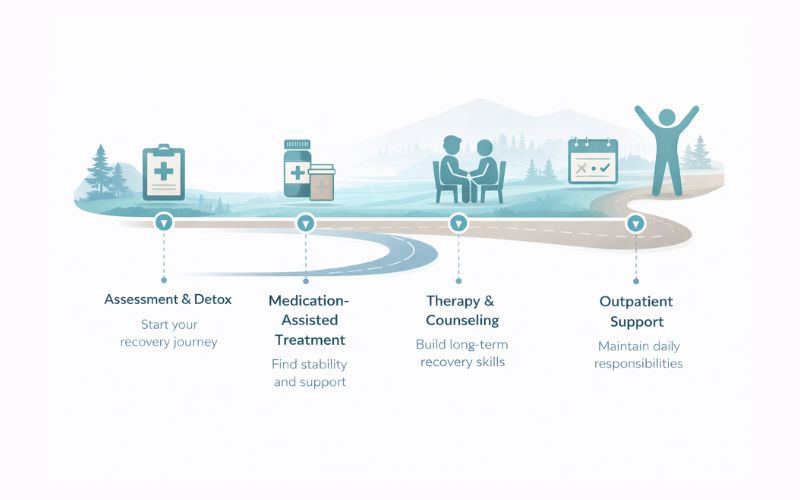
Outpatient Programs: Recovery While Maintaining Your Life
For many people in New Hampshire, residential treatment isn’t feasible due to work, family, or financial constraints. Outpatient programs provide intensive treatment while allowing people to maintain their daily responsibilities.
Intensive Outpatient Programs (IOP): These programs typically meet 3 to 5 times per week for several hours per session, combining group therapy, individual counseling, and medication management. IOP provides structure and support while allowing people to sleep at home and maintain employment. Understanding how to start an IOP program can help families navigate this process.
Partial Hospitalization Programs (PHP): More intensive than IOP, PHP involves treatment 5 to 6 days per week for most of the day. It’s often used as a step down from residential treatment or for people who need more support than standard IOP provides. Many families wonder about PHP treatment duration when considering options.
The flexibility of outpatient care makes it accessible for working professionals, parents, and anyone who needs treatment that fits their life rather than requiring them to put everything on hold.
Understanding Co-Occurring Disorders
Depression, anxiety, PTSD, and other mental health conditions frequently co-exist with heroin addiction. In fact, dual diagnosis treatment addressing both conditions simultaneously is essential for lasting recovery.
When mental health conditions go untreated, they significantly increase relapse risk. Someone might successfully complete detox and initial treatment, but if underlying depression or anxiety persists, the temptation to use substances for relief remains powerful. Research from NIDA indicates that approximately half of individuals with substance use disorders also experience co-occurring mental health conditions.
Integrated treatment addresses both conditions together, recognizing that they influence each other. This might include psychiatric medication management alongside addiction treatment, specialized therapy for trauma, or targeted interventions for specific mental health symptoms. Understanding how different substances affect mental health helps clinicians develop comprehensive treatment plans.
How Families Can Support Recovery
If someone you love is struggling with heroin addiction, you’re likely experiencing a range of emotions: fear, anger, guilt, confusion, and helplessness. Understanding how to help without enabling is one of the most challenging aspects of supporting someone in their recovery journey.
Taking Action During a Crisis
If you suspect someone has overdosed on heroin, call 911 immediately. Administer Narcan (naloxone) if available. New Hampshire’s Good Samaritan Law provides protection from prosecution for drug possession when calling for emergency help during an overdose.
Many families wonder when to intervene. While there’s no perfect time, you don’t have to wait for someone to hit “rock bottom.” Early intervention often leads to better outcomes.
Finding Treatment Quickly
When someone expresses willingness to get help, acting quickly is important. That window of motivation may be brief. Having a plan ready means you can move forward immediately.
Start by verifying insurance coverage and identifying treatment programs that accept your loved one’s insurance. Most treatment centers, including those offering comprehensive addiction treatment programs, can verify benefits quickly.
Consider transportation logistics and any immediate needs like childcare or work notifications. The fewer barriers between expressing willingness and starting treatment, the better.
Supporting Without Enabling
Supporting someone in recovery means encouraging treatment participation, celebrating milestones, and maintaining boundaries. Enabling looks like protecting someone from the consequences of their actions or providing financial support that inadvertently funds substance use.
Learning the difference between enabling versus supporting addiction recovery helps families navigate these challenging dynamics. Family therapy addresses the impact addiction has had on family relationships and begins the healing process for everyone affected.

Insurance and Accessibility in New Hampshire
Cost concerns often prevent people from seeking treatment. However, most insurance plans cover substance use disorder treatment, including detoxification, outpatient programs, and medication-assisted treatment.
The Affordable Care Act requires most insurance plans to cover mental health and substance use disorder services at the same level as medical and surgical care. This means your insurance likely covers more than you might expect.
New Hampshire Medicaid also covers comprehensive addiction treatment services. If you’re uninsured, state-funded treatment options exist, though availability can be limited.
Don’t let insurance confusion prevent you from reaching out. Most treatment centers will verify your benefits and explain your coverage before you commit to anything. When researching drug rehab programs in New Hampshire, ask about insurance verification services during your initial call.
FAQ: Heroin Addiction Treatment in New Hampshire
How long does heroin withdrawal last?
Acute withdrawal symptoms typically peak within 24 to 48 hours after the last use and improve within 5 to 7 days. However, some people experience post-acute withdrawal symptoms (PAWS) for weeks or months, including sleep disturbances, mood swings, and fatigue. Medication-assisted treatment significantly reduces the severity of withdrawal symptoms and can address longer-term symptoms as well.
Is medication-assisted treatment really necessary, or is it just replacing one drug with another?
This is one of the most common misconceptions about MAT. Medications like buprenorphine and methadone are prescribed and monitored by medical professionals. They stabilize brain chemistry without producing euphoria, allowing people to function normally, maintain employment, and engage in therapy. Research consistently shows that MAT significantly improves recovery outcomes and reduces overdose death risk compared to abstinence-based approaches alone.
Can someone recover from heroin addiction while working full-time?
Yes. Intensive outpatient programs and partial hospitalization programs are specifically designed to accommodate work schedules. Many people successfully maintain their employment while participating in treatment. In fact, maintaining work and daily responsibilities often supports recovery by providing structure, purpose, and financial stability.
What should I do if my loved one relapses during treatment?
Relapse doesn’t mean treatment has failed. It’s often part of the recovery process. The important thing is to return to treatment quickly without shame or judgment. Use the relapse as an opportunity to reassess the treatment plan and identify what additional support might be needed. Many people who experience relapse during early recovery go on to achieve lasting wellness. Understanding how to tell someone you relapsed can help facilitate these difficult but necessary conversations.
How do I know if someone needs residential treatment versus outpatient care?
This decision depends on several factors: severity of addiction, co-occurring medical or mental health conditions, living environment stability, and previous treatment history. A professional assessment can determine the appropriate level of care. Many people successfully recover through outpatient programs, while others benefit from the 24-hour structure of residential treatment initially. Comparing inpatient versus outpatient options can help clarify which approach might work best.
Start Heroin Addiction Treatment in New Hampshire Today
Whether you’re reading this for yourself or someone you care about, taking the time to understand heroin addiction and treatment options is already an important step. Recovery is possible, and you don’t have to navigate this alone.
Treatment centers throughout New Hampshire offer comprehensive, evidence-based care that addresses the physical, psychological, and social aspects of addiction. From medical detoxification to medication-assisted treatment, from individual therapy to family support programs, the resources exist to support your healing journey
If you or someone you love is ready to explore treatment options, reach out for a confidential conversation about your situation. Many centers offer free insurance verification and can help you understand your options without any obligation. The courage to ask for help is often the hardest part, and taking that first step opens the door to a future free from the grip of addiction. Rebuilding trust after addiction is possible when families work together through the recovery process.