

Addiction affects more than one person. It reshapes family relationships, communication patterns, and emotional safety. Even when a person begins recovery, loved ones often remain guarded, unsure when it is safe to believe again.
Rebuilding trust after addiction is a gradual process. It relies on consistent behavior, honest communication, healthy boundaries, and often professional guidance. For many families in New Hampshire and beyond, trust grows alongside recovery rather than after it.
This guide offers a clear, compassionate roadmap for families who want to move forward together.
How Families Rebuild Trust After Addiction
Families rebuild trust after addiction through honest communication, consistent actions over time, clear boundaries, and professional support. Trust is restored gradually through reliable behavior rather than promises. With patience and structure, relationships can heal alongside recovery.
How Addiction Damages Trust and Why Healing Takes Time
Trust is built on safety, honesty, and reliability. Addiction disrupts all three, often repeatedly. Families may experience broken promises, emotional distance, financial stress, or ongoing uncertainty.
Over time, loved ones can become hyper-vigilant. This response is not about punishment or control. It is the nervous system trying to protect itself after repeated harm.
Trust rebuilding also mirrors neurological healing. Understanding how long it takes to rewire the brain after addiction helps families set realistic expectations and reduces frustration when progress feels slow.
Step 1: Open and Honest Communication
Trust cannot exist without transparency. During recovery, communication shifts from secrecy to openness. This does not mean oversharing every detail. It means being honest, accountable, and emotionally present.
Healthy communication includes:
- Sharing plans and changes proactively
- Acknowledging struggles without defensiveness
- Listening without interruption
- Speaking openly about fears and needs
Many families find these conversations easier with professional guidance. Structured support through family and individual therapy helps rebuild communication skills, reduce conflict, and create emotional safety during recovery.
Emotional stress can also affect sleep, patience, and clarity. Many families notice that exhaustion makes trust repair harder, which is explored further in the link between sleepless nights and relationship anxiety.
Step 2: Apologies Backed by Consistent Action
Apologies matter, but trust rebuilds through behavior.
Families often need to see:
- Attendance at treatment or recovery programming
- Follow-through on daily responsibilities
- Honest disclosure when challenges arise
- Willingness to accept accountability
Consistency over weeks and months matters more than dramatic gestures. Trust grows when actions and words align repeatedly.

Step 3: Establishing Healthy Family Boundaries
Boundaries protect everyone involved. They create clarity, safety, and predictability during recovery.
Common boundary areas include:
- Sobriety expectations
- Financial limits
- Communication guidelines
- Household safety rules
Boundaries are not punishments. They are agreements that allow trust to grow without fear or constant monitoring.
For families navigating close or long-term relationships, guidance on healthy boundaries when dating someone in recovery often applies equally to parents, siblings, and partners rebuilding trust after addiction.
Step 4: Rebuilding Trust Through Consistency Over Time
Trust returns through steady reliability, not grand promises.
This includes:
- Showing up when expected
- Keeping commitments
- Communicating changes early
- Being honest about setbacks
Many families find that structured care supports consistency more effectively. A New Hampshire outpatient addiction treatment program provides accountability and therapeutic support while allowing individuals to maintain work, family responsibilities, and daily routines.
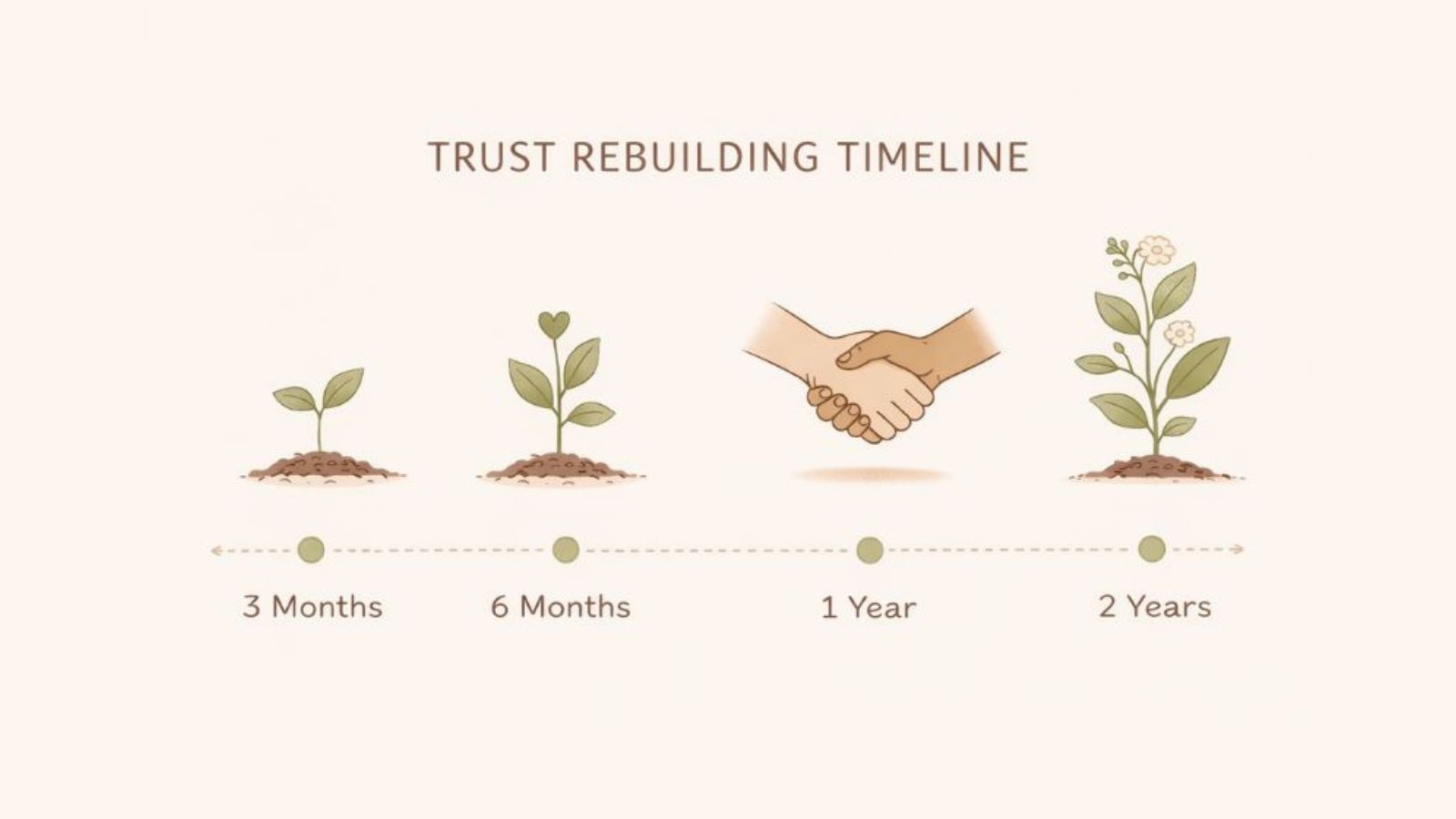
Trust Rebuilding Timeline
- 0–3 months: High caution, early stability
- 3–6 months: Cautious hope, testing consistency
- 6–12 months: Growing trust, reduced vigilance
- 1–2 years: Substantial trust restoration
Timelines vary. Setbacks do not erase progress, but they may slow the pace.
If relapse occurs, families often struggle with how to talk about it. A compassionate framework is outlined in how to tell someone you relapsed in five steps, which emphasizes honesty and repair without shame.
Step 5: Using Professional Support to Heal Together
Rebuilding trust after addiction is emotionally demanding. Professional support reduces strain and confusion.
Family therapy can help:
- Address lingering resentment or fear
- Teach communication and boundary skills
- Support loved ones alongside recovery
- Create a shared plan for long-term healing
Integrated care is especially helpful when addiction and mental health concerns overlap, as explained in our guide to dual diagnosis treatment and mental health support.
What Families Can Expect Moving Forward
Healing is not linear. Progress may feel slow at times. Moments of doubt are normal.
What often helps most:
- Patience with the process
- Support for both the person in recovery and loved ones
- Recognition of progress, even when imperfect
- Continued structure and open communication
Many families report stronger relationships after recovery than before, built on honesty rather than fear.
Frequently Asked Questions
How long does it take to rebuild trust after addiction?
Most families see meaningful progress within 6 to 12 months of consistent recovery. Deeper trust often develops over one to two years.
Can trust be rebuilt after relapse?
Yes. Relapse affects trust, but honesty and immediate return to care can prevent long-term damage.
Is forgiveness required to rebuild trust?
Forgiveness and trust are separate processes. Trust is based on behavior over time. Forgiveness is personal and cannot be rushed.
Is family therapy necessary?
Family therapy is not required, but it significantly improves communication, boundary setting, and long-term outcomes.
A Supportive Next Step
Rebuilding trust after addiction takes time, patience, and support. Families do not need to have all the answers to begin healing.
If you or someone you love is ready to explore next steps, our New Hampshire team is here to help. Call today to verify insurance and learn about personalized treatment and family support options.