

You’ve been using alcohol to quiet the anxiety. Or substances to numb the depression. Maybe both. For a while, it worked. But now the substances aren’t helping. They’re making everything worse. The anxiety rebounds harder. The depression deepens. You’re caught in a cycle you can’t break alone.
Here’s what you need to know: The question isn’t whether you have an addiction problem or a mood disorder problem. You have both. And trying to treat one without the other is like bailing water from a boat that still has a hole in it.
The good news? When mood disorders and addiction are treated together with the right therapies, recovery from both conditions is possible. This article explains which therapies work, how they work, and how to choose the right approach for your situation.
Why Mood Disorders and Addiction Often Occur Together
Approximately 21.2 million U.S. adults have both a mental illness and a substance use disorder, according to SAMHSA’s 2024 National Survey on Drug Use and Health. Among adults with any substance use disorder, 36.5% also have a psychiatric disorder. Studies consistently show that about 50% of people with a lifetime substance use disorder also have a mental health disorder, and vice versa.
The connection isn’t coincidental. Mood disorders and addiction share overlapping brain chemistry, similar risk factors, and a tendency to reinforce each other in destructive cycles.
Depression and Substance Use Disorder
Major depressive disorder co-occurs with substance use disorders at alarming rates. Research from the National Epidemiologic Survey on Alcohol and Related Conditions found that 40.3% of people with major depression also have an alcohol use disorder, and 17.2% have a drug use disorder.
The pattern is clear: People use substances to temporarily relieve depression symptoms. Alcohol provides short-term mood elevation. Stimulants offer temporary energy and motivation. Opioids numb emotional pain. But when the substances wear off, depression intensifies. Brain chemistry adapts to the substances, requiring more to achieve the same relief. The depression that drove initial use becomes worse because of continued use.
Without treating the underlying depression, sobriety feels unbearable. The depression triggers relapse. The cycle continues.
Anxiety Disorders and Addiction
Anxiety disorders take many forms: generalized anxiety (constant worry), social anxiety (fear of judgment and social situations), and panic disorder (sudden intense fear and physical symptoms). All create intense discomfort that substances temporarily relieve.
Alcohol reduces social inhibition and physical tension. Benzodiazepines calm racing thoughts. Cannabis dulls the sharp edges of panic. The problem? Substances provide relief for hours, but anxiety returns stronger. Rebound anxiety is a well-documented phenomenon where anxiety intensifies after substances leave the system. What started as occasional use to manage anxiety becomes daily dependence just to feel normal.
The person with anxiety and addiction faces a double burden: managing the original anxiety disorder while coping with withdrawal symptoms that mimic and amplify anxiety.
Bipolar Disorder and Addiction
Bipolar disorder has the highest rates of substance use disorder comorbidity among mood disorders. Research shows that 47.3% of people with any bipolar disorder also have a substance use disorder. For bipolar I disorder specifically, that rate jumps to 60.3%.
During manic or hypomanic phases, impulsivity increases. Decision-making is impaired. The person may use substances they wouldn’t touch during stable periods. During depressive phases, self-medication patterns emerge similar to major depression. The instability of untreated bipolar disorder makes maintaining sobriety nearly impossible. Mood swings drive use. Use destabilizes mood further. Medication non-compliance adds another layer of risk.
Bipolar disorder requires mood stabilization for recovery to take hold. Without addressing the underlying disorder, relapse is almost inevitable.
What Therapy Is Best for Depression and Addiction?
The answer depends on your specific situation, but research shows that three evidence-based therapies form the foundation of effective dual diagnosis treatment: Cognitive Behavioral Therapy (CBT), Dialectical Behavior Therapy (DBT), and trauma-informed approaches. Often, the most effective treatment combines elements from multiple modalities.
Cognitive Behavioral Therapy (CBT)
What it is: CBT focuses on identifying and changing the thought patterns that drive both mood disorders and addictive behaviors. The core premise is that thoughts influence feelings, which influence behaviors. By changing distorted thinking, you change how you feel and act.
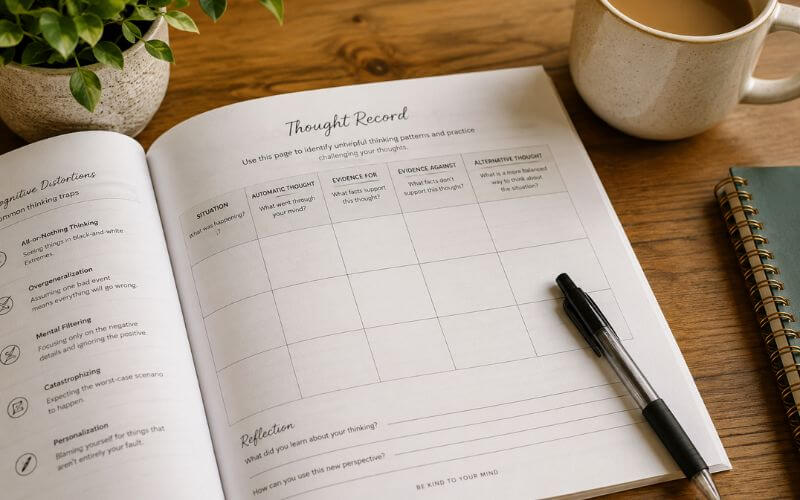
How it works for dual diagnosis: CBT addresses the cognitive distortions common to both conditions. In depression, these include catastrophizing (“Everything is hopeless”), black-and-white thinking (“I’m either perfect or I’m worthless”), and negative self-talk. In addiction, cognitive distortions include justifications (“I can handle just one drink”), minimization (“My using isn’t that bad”), and trigger rationalization (“I deserve this after the day I had”).
CBT for dual diagnosis teaches you to:
- Recognize automatic negative thoughts
- Challenge distorted thinking with evidence
- Reframe situations more realistically
- Develop coping strategies that don’t involve substances
- Build behavioral activation (structured activity to counter depression)
Evidence: A meta-analysis by Magill and colleagues (2019) reviewing 83 randomized controlled trials found that CBT produces small to moderate effects on substance use compared to inactive treatment, with effect sizes of 0.17 to 0.45. Effects are strongest in the first six months after treatment. For depression combined with alcohol use disorder, a 2014 meta-analysis of 32 trials found that CBT combined with motivational interviewing showed the strongest effects on abstinence, relapse prevention, and depression symptoms.
Best for: Depression with substance use disorder, anxiety disorders with substance use disorder, and people who respond well to structured, skills-based approaches.
What happens in a session: Your therapist might ask you to track your thoughts when you experience cravings or depressive episodes. Together, you examine the evidence for and against those thoughts. You practice generating alternative interpretations. You develop a plan for behavioral responses that don’t involve substances. Our individual therapy sessions integrate CBT techniques tailored to your unique challenges.
Dialectical Behavior Therapy (DBT)
What it is: DBT is a skills-based therapy originally developed for borderline personality disorder but highly effective for emotional dysregulation and impulsive behaviors. It teaches four core skill sets: mindfulness, distress tolerance, emotion regulation, and interpersonal effectiveness.
How it works for dual diagnosis: Many people with mood disorders and addiction struggle with intense emotions they don’t know how to manage without substances. DBT provides concrete skills for tolerating emotional distress, regulating mood swings, and communicating needs effectively.
DBT skills for dual diagnosis include:
- TIPP skills for crisis moments (Temperature, Intense exercise, Paced breathing, Paired muscle relaxation)
- Mindfulness to observe emotions without reacting to them
- Opposite action to counter depression (act opposite to what depression tells you)
- Interpersonal effectiveness to maintain relationships without using substances
Evidence: While comprehensive meta-analyses specifically for DBT in dual diagnosis are limited in current literature, DBT has shown moderate effectiveness for substance use disorders in emotional dysregulation contexts. Research by Linehan and colleagues in the early 2000s demonstrated DBT’s efficacy for substance-dependent individuals with borderline personality disorder.
Best for: Bipolar disorder with substance use disorder, emotional dysregulation with addiction, people who experience intense mood swings, and those whose substance use is driven by an inability to tolerate distress.
What happens in a session: DBT typically involves both individual therapy and skills groups. In individual sessions, you work on applying skills to your specific situations. In group, you learn and practice new skills with others facing similar challenges. Your therapist helps you create a “crisis survival kit” of skills to use when cravings or intense emotions hit. Learn more about our therapy approach here.
Trauma-Informed Therapy
What it is: Trauma-informed therapy recognizes that many people with mood disorders and addiction have trauma histories. Modalities include Eye Movement Desensitization and Reprocessing (EMDR), trauma-focused CBT, and somatic (body-based) approaches.
Why it matters: Research shows that a high percentage of people with addiction have experienced trauma. Untreated trauma drives both mood disorder symptoms and substance use. The person uses substances to manage trauma-related anxiety, hypervigilance, intrusive memories, and emotional numbing. Without addressing the trauma, these symptoms continually trigger relapse.
How it works: Trauma therapy doesn’t mean re-traumatizing yourself by reliving painful experiences. Modern trauma therapy uses techniques that allow you to process traumatic memories while maintaining a sense of safety and control. EMDR uses bilateral stimulation (eye movements, tapping) to help the brain reprocess traumatic memories. Trauma-focused CBT gradually exposes you to trauma reminders while teaching coping skills. Somatic approaches focus on releasing trauma stored in the body.
Best for: PTSD with substance use disorder, trauma-related depression or anxiety with addiction, and people whose substance use began after a traumatic experience.
Heartfelt’s approach: All of Heartfelt’s programming follows trauma-informed care principles, meaning therapists understand trauma’s impact and create safety in the therapeutic relationship. For clients with significant trauma histories, specialized trauma therapy is integrated into the treatment plan.
Medication Management in Dual Diagnosis Treatment
For many people with dual diagnoses, therapy alone isn’t enough. Severe depression, bipolar disorder, and some anxiety disorders require medication for mood stabilization. The key is integrating medication management with therapy, not relying on medication as the sole treatment.
When medication is typically needed:
- Severe depression with suicidal thoughts
- Bipolar disorder (mood stabilizers are essential)
- Panic disorder or severe generalized anxiety
- Depression or anxiety that hasn’t responded to therapy alone
Common medications used:
- SSRIs or SNRIs for depression and anxiety (non-addictive)
- Mood stabilizers for bipolar disorder (lithium, lamotrigine, valproate)
- Non-addictive anti-anxiety medications (buspirone, hydroxyzine)
- In some cases, medications specifically for cravings (naltrexone, acamprosate)
Why therapy plus medication works better than either alone: Medication addresses brain chemistry imbalances and provides a foundation of mood stability. Therapy teaches skills for managing symptoms, changing behaviors, and preventing relapse. Research by Cuijpers and colleagues found that CBT combined with pharmacotherapy is significantly more effective than pharmacotherapy alone for depression, with lower relapse rates.
At Heartfelt, medication-assisted treatment is overseen by a psychiatrist who specializes in addiction medicine. This ensures that all medications prescribed are safe for people in recovery and that the medication plan supports, rather than complicates, sobriety.
How Does DBT Help Anxiety in Recovery?
Because anxiety disorders are so common in people with substance use disorders, it’s worth exploring how DBT specifically addresses anxiety in recovery.
Distress Tolerance for Panic Attacks
Panic attacks create intense physical sensations: racing heart, shortness of breath, chest tightness, and dizziness. These sensations are terrifying, and many people’s first instinct is to reach for substances to make them stop. DBT’s distress tolerance skills provide alternative strategies.
The TIPP skills work particularly well for panic:
- Temperature: Splash your face with cold water or hold ice in your hands. This activates the dive reflex, which naturally slows your heart rate.
- Intense exercise: Do jumping jacks, run in place, or take a brisk walk. Physical activity burns off adrenaline.
- Paced breathing: Breathe in for four counts, out for six. The longer exhale activates your parasympathetic nervous system.
- Paired muscle relaxation: Tense and release muscle groups systematically.
These skills interrupt the panic cycle without substances.
Mindfulness for Rumination and Worry
Generalized anxiety involves constant “what if” thinking. Your mind races through worst-case scenarios. You can’t shut it off. Traditional anxiety management says “don’t think about it” or “think positive instead.” That rarely works. DBT’s mindfulness takes a different approach: observe the thoughts without engaging with them.
You learn to notice “I’m having the thought that something terrible will happen” rather than believing the thought is truth. You practice returning attention to the present moment. You realize that anxious thoughts are just mental events, not predictions you must follow.
Interpersonal Effectiveness for Social Anxiety
Social anxiety makes recovery particularly challenging because so much of recovery involves social interaction: attending support groups, family therapy, and building sober relationships. DBT’s interpersonal effectiveness skills teach you how to:
- Ask for what you need (even when anxious)
- Set boundaries without guilt
- Maintain relationships while staying true to your recovery
- Navigate social situations without substances as a crutch
You practice these skills first in therapy, then in real-world situations, gradually building confidence.
Choosing the Right Therapy Based on Your Mood Disorder
You don’t have to choose just one therapy. Heartfelt’s approach combines therapies based on your unique needs. However, understanding which therapy addresses which issues helps you know what to expect.
If you have depression with substance use disorder:
Start with CBT to address the thought patterns driving both conditions. CBT for depression focuses on behavioral activation (getting you moving and engaged in life again), challenging negative thoughts, and building structure and routine. CBT for addiction addresses triggers, urge management, and relapse prevention.
Consider medication evaluation, especially if you have severe depression, suicidal thoughts, or depression that hasn’t responded to therapy in the past. The combination of CBT and appropriate medication has strong research support.
Focus on building a life worth staying sober for. Depression tells you nothing matters. Recovery proves depression wrong by helping you create meaning, connection, and purpose.
If you have anxiety with substance use disorder:
DBT skills provide immediate tools for managing anxiety without substances. Distress tolerance skills help you ride out panic attacks and intense worry. Mindfulness skills reduce rumination. Interpersonal effectiveness helps with social anxiety.
CBT exposure work (gradually facing feared situations) builds long-term anxiety resilience. This happens once you have solid coping skills in place.
Address avoidance patterns. Anxiety drives avoidance. Avoidance maintains anxiety. Substances provide temporary escape from avoided situations. Treatment helps you approach rather than avoid what makes you anxious.
If you have bipolar disorder with substance use disorder:
Medication management is essential, not optional. Bipolar disorder involves brain chemistry imbalances that therapy alone cannot address. Mood stabilizers prevent the extreme swings that drive substance use.
DBT skills help manage impulsivity during hypomanic or manic phases and cope with depression during low phases. Emotional regulation skills are particularly important.
Routine stabilization is critical. Sleep schedules, meal times, medication times, and therapy appointments should happen at consistent times. Bipolar disorder responds well to structure. Substance use thrives on chaos. Recovery means building predictable patterns.
Monitor closely for warning signs of mood episodes. Early intervention prevents full-blown mania or deep depression, both of which increase relapse risk dramatically.
If you have a trauma history with mood disorders and addiction:
Safety and stabilization come first. Trauma therapy doesn’t begin until you have some period of sobriety and basic coping skills in place. Trying to process trauma while actively using substances or in early, fragile sobriety can overwhelm your coping capacity.
All therapy should be trauma-informed, meaning your therapist understands how trauma affects you and creates a sense of safety in the therapeutic relationship.
When you’re ready, trauma-specific therapy (EMDR or trauma-focused CBT) helps you process traumatic memories that fuel mood disorder symptoms and substance use. Many people find that addressing underlying trauma reduces both depression/anxiety and cravings.
Your treatment plan should address all three: trauma, mood disorder, and addiction. They’re interconnected. Treating just one leaves the others to undermine your recovery.

Dual Diagnosis Treatment at Heartfelt Recovery Centers
Heartfelt Recovery Centers specializes in dual diagnosis treatment. We don’t treat addiction while ignoring mood disorders, and we don’t treat mood disorders while minimizing addiction. We address both together with evidence-based therapies proven effective for co-occurring conditions.
Personalized Assessment
Treatment begins with a thorough evaluation:
- Mental health assessment by a licensed clinician
- Addiction severity evaluation
- Trauma screening
- Medical history and current medications review
- Treatment history (what’s worked, what hasn’t)
Based on this assessment, we develop a personalized treatment plan that addresses your specific combination of conditions.
Flexible Program Options
Partial Hospitalization Program (PHP): For severe depression, bipolar disorder, or situations requiring intensive medical monitoring and psychiatric oversight. Our PHP provides structured programming five days per week with individual therapy, group therapy, psychiatric services, and medication management. This level of care is appropriate when outpatient treatment alone isn’t sufficient.
Intensive Outpatient Program (IOP): Our flexible IOP offers evidence-based therapy three to five times per week with evening and weekend options. This allows you to maintain work and family responsibilities while receiving dual diagnosis treatment. IOP includes individual therapy tailored to your mood disorder and addiction, group therapy for skill-building and peer support, and psychiatric services for medication management.
Individual Therapy: One-on-one sessions with a therapist trained in CBT, DBT, and trauma-informed care. Your therapist works with you to apply evidence-based techniques to your specific situation.
Group Therapy: Skills groups teach DBT techniques, relapse prevention strategies, and coping skills. Process groups provide peer support and help you realize you’re not alone in struggling with co-occurring conditions.
Evidence-Based Modalities
All Heartfelt therapists are trained in Cognitive Behavioral Therapy, Dialectical Behavior Therapy, and trauma-informed care. We don’t use one-size-fits-all treatment. Your therapy is tailored to your specific mood disorder and addiction patterns.
Our clinical team receives regular supervision to ensure quality care and adherence to evidence-based practices. We track outcomes to monitor progress and adjust treatment when needed.
Medical and Psychiatric Oversight
Our medical director oversees all clinical programming. A consulting psychiatrist provides medication management for clients requiring pharmacotherapy. We coordinate with your outside providers (primary care doctor, psychiatrist, and therapist) to ensure continuity of care.
For clients already on psychiatric medications, we ensure medication compliance and monitor for interactions with recovery. For clients who may benefit from medication, we provide evaluation and prescribing services.
Family Involvement
Mood disorders and addiction affect the entire family. Our family therapy programs teach communication skills, healthy boundaries, and how family members can support recovery without enabling.
Family education helps loved ones understand that depression, anxiety, or bipolar disorder aren’t character flaws or choices. They’re medical conditions requiring treatment, just like addiction.
Joint Commission Accreditation
Heartfelt Recovery Centers is Joint Commission Accredited, which means we meet the highest national standards for patient safety and care quality. Our staff, programming, facilities, and clinical practices undergo rigorous evaluation to maintain this accreditation.
For you, this means you can trust that the care you receive is evidence-based, professionally delivered, and held to measurable quality standards.
Recognizing When You Need Dual Diagnosis Treatment
How do you know if you need dual diagnosis treatment versus addiction treatment alone? Here are the warning signs:
You’re using substances to manage mood symptoms: If you drink to cope with anxiety, use stimulants to manage depression’s fatigue, or use any substance specifically to change how you feel emotionally, you likely have co-occurring conditions.
Previous treatment didn’t work: If you’ve been in addiction treatment before and relapsed, unaddressed mood disorders may be the reason. If you’ve been in therapy for depression or anxiety without improvement, unaddressed substance use may be sabotaging your progress.
Persistent mood symptoms despite sobriety: If you’ve been sober for weeks or months and still struggle with significant depression, anxiety, or mood swings, you need mental health treatment alongside addiction support.
Suicidal thoughts or self-harm: These require immediate professional intervention. Dual diagnosis treatment provides the psychiatric support necessary to address suicidal ideation safely.
Medication non-compliance: If you’re prescribed psychiatric medication but don’t take it consistently, this pattern needs to be addressed in treatment. Medication non-compliance is common in both mood disorders and addiction. Dual diagnosis treatment addresses the barriers to consistent medication use.
Inability to cope with emotions without substances: If you don’t know how to manage sadness, anxiety, anger, or even joy without using substances, you need to learn emotional regulation skills. This is the core of DBT and a critical component of dual diagnosis treatment.
Rapid mood swings affecting your recovery: If your mood is unpredictable and interferes with your ability to work, maintain relationships, or stick with recovery commitments, you may have an undiagnosed or undertreated mood disorder.
Don’t wait for a crisis. Early intervention prevents relapse and addresses mood disorders before they worsen. If you recognize any of these patterns, our team can help you understand whether dual diagnosis treatment is right for you.

Frequently Asked Questions
Do I have to treat my depression before I can get sober?
No. The outdated model was “get sober first, then we’ll address mental health.” This approach failed most people. Modern dual diagnosis treatment addresses both conditions simultaneously. In fact, treating depression while supporting early sobriety often makes staying sober easier because you’re learning healthier coping strategies.
Will therapy alone work, or do I need medication?
It depends on the severity of your mood disorder. Mild to moderate depression and some anxiety disorders respond well to therapy alone. Severe depression, bipolar disorder, and some anxiety disorders typically require medication for mood stabilization. The good news is that research shows therapy plus medication works better than either alone. Your treatment team will help you determine what’s right for your situation.
How long does dual diagnosis treatment take?
There’s no one-size-fits-all timeline. Our Intensive Outpatient Program typically runs 8-12 weeks, but some people need more or less time depending on their specific situation. The goal isn’t to rush through treatment. It’s to provide the time and support you need to develop skills, stabilize your mood, and build a foundation for long-term recovery.
Does insurance cover dual diagnosis treatment?
Most insurance plans cover dual diagnosis treatment. The Mental Health Parity and Addiction Equity Act requires insurance companies to cover mental health and substance use disorder treatment at the same level as physical health conditions. Heartfelt accepts most major insurance plans. Verify your coverage here to understand your benefits.
What if I’ve tried therapy before and it didn’t work?
There are several reasons previous therapy may not have worked. You may have received treatment for addiction without addressing the mood disorder, or vice versa. The therapy modality may not have been the right fit for you. The therapist may not have specialized in dual diagnosis. Or you may not have been ready at that time. Dual diagnosis treatment with evidence-based therapies specifically designed for co-occurring conditions offers a different approach. Many people who “failed” previous treatment succeed when they receive the right treatment for their specific situation.
Can I maintain my job while in dual diagnosis treatment?
Yes. Our IOP is designed with flexible scheduling, including evening and weekend sessions, so you can receive treatment while maintaining work and family responsibilities. If you need more intensive care, our PHP program provides structured daytime programming that still allows you to return home each evening.
What if I need medical detox before starting treatment?
If you’re physically dependent on alcohol or other substances, you may need medical detoxification before beginning our programs. We coordinate detox placement with trusted medical facilities and ensure seamless transition into our PHP or IOP programs once you’re medically stable. Your safety is our priority.
Recovery from Both Conditions Is Possible
Living with depression and addiction, anxiety and addiction, or bipolar disorder and addiction is exhausting. You’ve been fighting two battles at once, often without realizing it. You’ve probably blamed yourself for not being able to “just stop” or “just feel better.” Here’s the truth: You can’t think your way out of a mood disorder, and you can’t use willpower alone to overcome addiction. You need the right treatment for both conditions.
The therapies described in this article work. CBT, DBT, trauma-informed care, and medication management have decades of research supporting their effectiveness. When these evidence-based approaches are delivered in a dual diagnosis treatment program, recovery from both conditions becomes not just possible but probable.
At Heartfelt Recovery Centers, we understand that your depression, anxiety, or bipolar disorder isn’t separate from your addiction. They’re interconnected. Our dual diagnosis specialists have the training and experience to address both conditions together, with personalized treatment plans that recognize your unique needs.
You don’t have to continue fighting alone. If you’re struggling with a mood disorder and substance use, or if previous treatment hasn’t worked, call us at 603-207-1633 for a free, confidential clinical assessment. We’ll help you understand your options and determine the right level of care for your situation.
We accept most insurance plans. Verify your coverage to understand your benefits. Our admissions team can answer questions about treatment, scheduling, and how our flexible programs fit your life.
Recovery from both mood disorders and addiction is happening every day. With the right treatment, you can be one of the success stories.
About the Author
Mitchell Cohen, LICSW, MLADC is a licensed clinical social worker and Master Level Alcohol and Drug Counselor at Heartfelt Recovery Centers in Hudson, NH. With over 12 years of experience in outpatient addiction treatment, Mitchell specializes in family systems therapy, relapse prevention planning, and dual diagnosis treatment. He is trained in Cognitive Behavioral Therapy (CBT), Dialectical Behavior Therapy (DBT), and holds advanced certifications in family intervention techniques and trauma-informed care. Meet the Heartfelt clinical team.