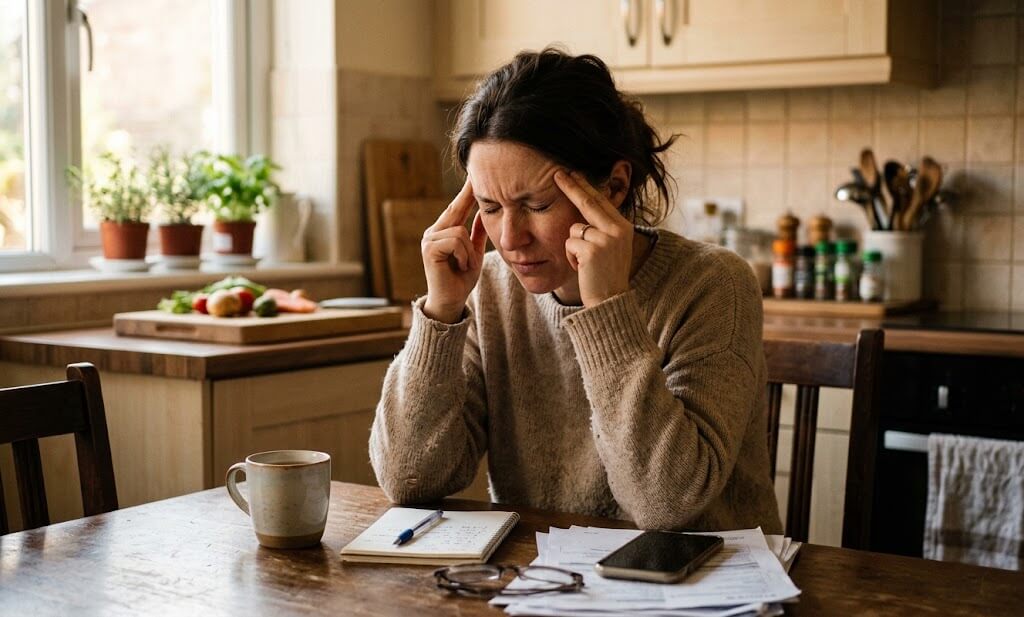


It starts as relief.
A drink at the end of a hard day. Two drinks at a party where the social anxiety would otherwise be unbearable. A glass of wine to get to sleep when the thoughts won’t stop.
For people who live with anxiety and alcohol use disorder, alcohol can feel like a solution because, in the short term, it functions like one. It quiets the nervous system. It lowers the threshold for social situations. It offers a few hours of respite from a brain that rarely stops running threat assessments.
The problem is what happens next.
The relief alcohol provides is borrowed. The anxiety it temporarily suppresses returns, and research consistently shows it returns harder. Over time, a pattern develops in which alcohol is required not just to feel good, but to feel baseline. The anxiety that existed before becomes amplified by the alcohol use itself. The drinking that was managing the anxiety becomes a primary source of it.
This is the self-medication cycle, and it is one of the most common and least understood dynamics in addiction treatment. Understanding how it works is the first step toward breaking it.
Why Anxiety and Alcohol Use Disorder So Often Occur Together
Anxiety disorders are the most common mental health conditions in the United States, affecting roughly one in five adults (ADAA; NIH). According to the 2024 National Survey on Drug Use and Health, approximately 27.9 million Americans ages 12 and older had alcohol use disorder (NIAAA, 2024). The overlap between the two is substantial: research consistently shows that individuals with anxiety disorders are two to three times more likely to develop alcohol use disorder than those without.
This overlap is not coincidental. It reflects a specific neurological relationship between anxiety, the brain’s stress response systems, and alcohol’s mechanism of action.
The brain has a natural calming system built around a neurotransmitter called GABA (gamma-aminobutyric acid). Alcohol enhances GABA activity, which is why it produces feelings of relaxation, reduced inhibition, and temporary relief from anxiety. For someone whose anxiety system runs at a chronically elevated level, that GABA enhancement can feel profoundly relieving.
The brain, however, is adaptive. With repeated alcohol use, it begins to compensate for the artificial GABA boost by downregulating its own GABA production and increasing the activity of glutamate, the brain’s primary excitatory neurotransmitter. The nervous system recalibrates around the presence of alcohol.
When alcohol is not present, the result is a nervous system running high on glutamate with reduced natural calming. This produces anxiety, restlessness, irritability, and, in more severe cases, physical withdrawal symptoms. The anxiety that drove the drinking in the first place is now worse than it was before, and it is partly being caused by the drinking itself.
The Cycle: How Self-Medication Becomes the Problem
Understanding the biology is useful, but the lived experience of this cycle is what most people recognize.
Anxiety is present, often chronically. Generalized anxiety, social anxiety, panic disorder, or the kind of ambient dread that doesn’t have a clear name but never fully goes away.
Alcohol provides temporary relief. The nervous system quiets. Social situations become manageable. Sleep comes more easily. For a period, this feels like a workable solution.
Tolerance develops. The amount of alcohol required to produce the same relief increases over time. What once took one or two drinks now takes three or four.
Rebound anxiety appears. The morning after drinking, anxiety returns at higher intensity than baseline. This is the glutamate rebound effect. Many people experience this as hangover anxiety, sometimes called “hangxiety,” which can be severe.
Drinking increases to manage the rebound. The cycle tightens. Alcohol is now being used not just to manage original anxiety but to manage the anxiety the alcohol itself is creating.
Withdrawal anxiety becomes indistinguishable from the original condition. At this stage, it is often impossible to know how much of the anxiety is the underlying disorder and how much is driven by alcohol dependence. The two have become functionally intertwined.
This is why treating alcohol use disorder without simultaneously addressing the underlying anxiety so often fails. Stopping alcohol in the absence of mental health treatment leaves the original anxiety untreated. The discomfort of that untreated anxiety is a primary driver of relapse.

Why Does Alcohol Make Anxiety Worse Over Time?
This is one of the most common questions people search when they begin to suspect their drinking is connected to their anxiety. The neurological answer is above, but the practical answer deserves its own space.
Alcohol makes anxiety worse over time for several interconnected reasons.
Sleep disruption. Alcohol interferes with REM sleep, the deep restorative phase. Poor sleep quality is one of the most significant drivers of elevated anxiety the following day. People who use alcohol to fall asleep often sleep faster but wake more frequently and feel less rested.
Blood sugar fluctuation. Alcohol causes blood sugar to rise and then drop. That drop triggers cortisol release, the body’s primary stress hormone. Elevated morning cortisol contributes directly to the anxious, on-edge feeling many people experience the day after drinking.
Dehydration. Even mild dehydration activates the body’s stress response. Alcohol is a diuretic, and the dehydration it causes contributes to the physical symptoms of anxiety: racing heart, dry mouth, and light-headedness.
Cortisol and the HPA axis. Regular alcohol use dysregulates the hypothalamic-pituitary-adrenal (HPA) axis, the system that governs the stress response. Over time, this dysregulation means the body mounts a larger cortisol response to everyday stressors, raising the baseline of anxiety even on days when alcohol is not consumed.
Nutritional depletion. Alcohol depletes B vitamins, magnesium, and zinc, all of which play roles in nervous system regulation and mood stability. Chronic deficiencies in these nutrients are associated with increased anxiety and depression.
The cumulative effect of these mechanisms is a nervous system that becomes progressively less equipped to manage anxiety without chemical support, while simultaneously becoming more dependent on a substance that worsens the underlying condition.
What Co-Occurring Anxiety and Alcohol Use Disorder Looks Like in Real Life
The clinical picture of co-occurring anxiety and alcohol use disorder varies, but some common patterns present across Heartfelt’s patient population in New Hampshire.
The person who has always been “a worrier” and discovered in their 20s or 30s that alcohol was the first thing that made social situations feel manageable. Over a decade, the drinking that began as a social lubricant has quietly become daily, then necessary.
The professional whose anxiety about work performance is managed with after-work drinks that have expanded to lunchtime, then to needing a drink to start the day without shaking.
The parent whose anxiety about family, finances, and daily pressures found relief in wine at the end of the day, a ritual that has grown from one glass to a bottle and now feels non-negotiable.
The person who was prescribed medication for anxiety that didn’t work well enough or had side effects they couldn’t tolerate and found that alcohol was more reliable, more available, and didn’t require explaining to anyone.
None of these patterns are moral failures. All of them describe someone trying to manage a real experience with the tools they had available. All of them respond well to treatment when both conditions are addressed together.

Why Treating One Without the Other Rarely Works
This point is foundational to dual diagnosis treatment, and it is worth stating plainly.
If someone with co-occurring anxiety and alcohol use disorder receives treatment for the alcohol use alone, the untreated anxiety remains a constant pressure toward relapse. Every difficult day, every social situation, every sleepless night becomes a cue. Without the skills and support to manage anxiety through other means, the pull back toward alcohol is persistent and powerful.
If someone receives treatment for anxiety alone, without addressing the alcohol use disorder, the alcohol itself continues to worsen anxiety through the mechanisms described above. Medications that might effectively treat anxiety in a sober patient may not work as intended in the presence of active alcohol use. The therapeutic work of learning to manage anxiety is constantly undermined by the neurological effects of drinking.
Integrated treatment, addressing both conditions simultaneously within the same clinical framework, produces significantly better outcomes than treating either condition in isolation. Research consistently shows that integrated dual diagnosis care is associated with greater reductions in both anxiety symptoms and alcohol use compared to treating each condition separately or in sequence.
At Heartfelt, dual diagnosis treatment is not a specialty track for complicated cases. It is the standard of care. The clinical team is structured around the understanding that mental health and substance use are rarely fully separable and that treatment plans are built to address both from the first assessment.
What Dual Diagnosis Treatment for Anxiety and Alcohol Use Disorder Looks Like at Heartfelt
For someone presenting with co-occurring anxiety and alcohol use disorder in New Hampshire, a comprehensive assessment at Heartfelt evaluates both conditions and determines the appropriate level of care.
Detox placement, if indicated. For individuals with significant physical alcohol dependence, medical detoxification may be the necessary first step before outpatient treatment begins. Heartfelt coordinates detox placement and manages the transition to outpatient care.
Partial Hospitalization Program (PHP). PHP provides five days per week of intensive programming with medical monitoring, psychiatric services, individual therapy, and structured group work. For someone with co-occurring anxiety and alcohol use disorder, the medical oversight available in PHP supports both safe stabilization and early mental health intervention.
Intensive Outpatient Program (IOP). For those who have stabilized or whose clinical picture is less acute, IOP offers three to five sessions per week with evening availability. Programming integrates CBT, DBT, and trauma-informed approaches that address both anxiety and alcohol use directly.
Medication management. A psychiatric provider evaluates and manages medications for anxiety as part of the treatment plan. This may include FDA-approved medications for both anxiety and alcohol use disorder. Medication decisions are made with full awareness of the interaction between the two conditions.
Individual therapy. One-on-one therapy addresses the specific history, patterns, and needs of each person. For anxiety and alcohol use disorder, this typically involves working through the origins of the anxiety, developing non-chemical regulation strategies, and processing any underlying trauma that may be driving both conditions.
Relapse prevention with anxiety integration. Relapse prevention work at Heartfelt explicitly addresses anxiety triggers, avoidance patterns, and the specific high-risk situations where the pull toward alcohol as an anxiety management tool is strongest.
There Is a Way Out of the Cycle
The self-medication cycle feels, from the inside, like an impossible bind. The anxiety makes stopping drinking feel unthinkable. The drinking makes the anxiety worse. Every attempt to address one without the other stalls.
Integrated treatment exists precisely because this bind is real. It is not a willpower problem. It is a clinical problem, and it has clinical solutions.
People come through co-occurring anxiety and alcohol use disorder every day. They do not just stop drinking and white-knuckle their way through a more anxious life. They develop genuine skills for managing anxiety, often for the first time. They rebuild sleep. They restore their nervous system’s capacity to self-regulate. They find that the anxiety, treated properly, is often significantly less severe than it was when alcohol was making it worse.
Recovery from both conditions together is not twice as hard as recovery from one. In many ways it is easier, because the underlying driver of the substance use is finally being addressed.

Taking the First Step
If you recognize yourself in the pattern described here, you don’t need to wait for a worse moment to reach out.
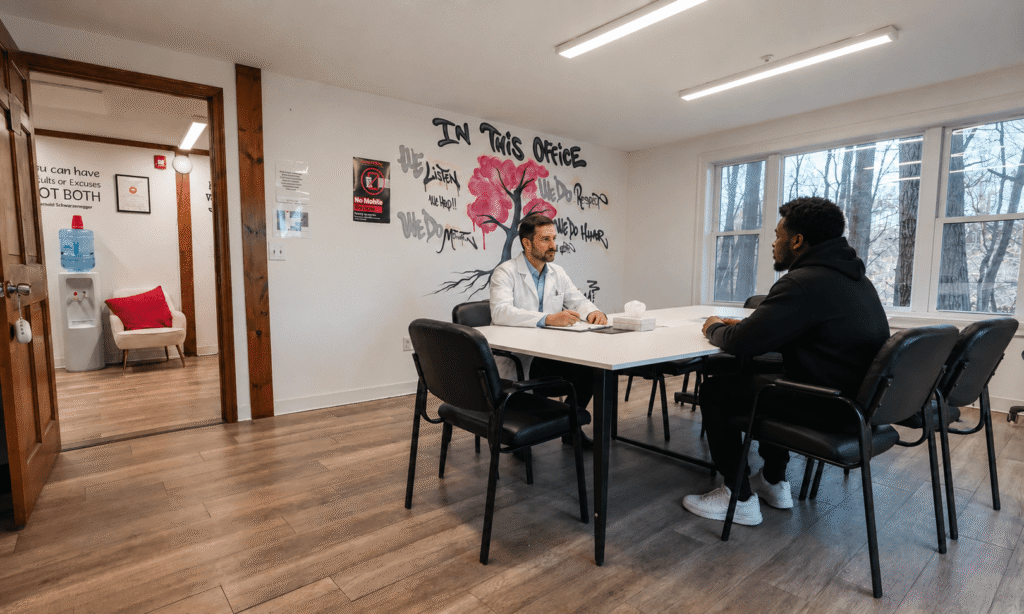
A comprehensive assessment at Heartfelt Recovery Centers evaluates both your anxiety and your alcohol use disorder together. You’ll speak with a clinician who understands how these conditions interact, who will ask careful questions, listen to your experience, and give you an honest picture of what treatment could look like for you.
We verify insurance before you commit to anything. We’ll explain what PHP or IOP involves, week by week. We’ll answer questions about privacy, scheduling, and what to expect. And if what we offer isn’t the right fit, we’ll tell you that and help you find what is.
The cycle you’ve been caught in has a way out. It starts with one conversation.
Call Heartfelt Recovery Centers at (603) 207-1633 or verify your insurance online to schedule a free, confidential assessment. Our clinical team specializes in dual diagnosis treatment for anxiety and alcohol use disorder in New Hampshire and Massachusetts.
Heartfelt Recovery Centers is a Joint Commission-accredited, LegitScript-certified outpatient addiction treatment center located at 41 Sagamore Park Road, Hudson, NH, serving New Hampshire and Massachusetts.
Related Reading
- Dual Diagnosis Treatment: Addiction and Mental Health Together
- Alcohol Addiction: Signs, Treatment, and Recovery in NH
- Partial Hospitalization Program (PHP) at Heartfelt
- Intensive Outpatient Program (IOP) at Heartfelt
- Medication-Assisted Treatment in New Hampshire
- Verify Your Insurance for Dual Diagnosis Treatment

MD Mitchell Grant Cohen
Dr. Mitchell G. Cohen is a board-certified Internal Medicine specialist with over 34 years of experience in patient-centered healthcare. A graduate of Hahnemann University School of Medicine, Dr. Cohen completed his internship at the University Health Center of Pittsburgh, where he gained invaluable hands-on experience. He is also a certified addiction specialist, holding membership with the American Society of Addiction Medicine (ASAM).
Currently based in Nashua, NH, Dr. Cohen is affiliated with Saint Joseph Hospital, where he provides comprehensive care focusing on both internal medicine and addiction treatment. His expertise includes prevention, diagnosis, and management of adult diseases, as well as specialized care for individuals facing substance use disorders.
Dr. Cohen is committed to fostering open communication, ensuring his patients are fully informed and empowered to make confident decisions about their health and treatment options.