

An accredited, legitimate addiction treatment center is one that has been independently reviewed against recognized clinical, safety, and ethical standards, not one that simply says so on its homepage. For families in New Hampshire and Massachusetts researching care, three separate things matter: national accreditation from a body like the Joint Commission, certification specifically for ethical marketing practices like LegitScript, and a valid state license to operate. All three are checkable in a few minutes using free public tools, and none of them require taking a facility’s word for it.
What Joint Commission Accreditation Actually Means
The Joint Commission is an independent, nonprofit organization that evaluates healthcare providers, including addiction and mental health treatment centers, against detailed standards covering patient safety, staff qualifications, treatment protocols, and documentation. Accredited facilities display the Gold Seal of Approval, but a logo on a website is not proof by itself. Accreditation can lapse, be placed on probation, or be revoked, and a seal image does not update itself when that happens.
The reliable way to confirm current status is the Joint Commission’s own public Quality Check tool at qualitycheck.org, which lets anyone search a facility by name and see its accreditation status directly from the source rather than from marketing copy. The accreditation cycle runs three years, with ongoing monitoring and unannounced surveys in between, so a facility’s status can be confirmed as current rather than simply historical.
What LegitScript Certification Means and Why It Exists
LegitScript certification is a separate credential from clinical accreditation, and it exists for a specific reason worth understanding. Around 2017 and 2018, widespread patient brokering scandals in the addiction treatment industry, particularly in Florida, involved lead generation companies and facilities paying for patient referrals and using deceptive advertising to target people in crisis. In response, Google began requiring LegitScript certification for any addiction treatment advertiser in the United States, and Meta and Microsoft Bing adopted similar requirements shortly after.
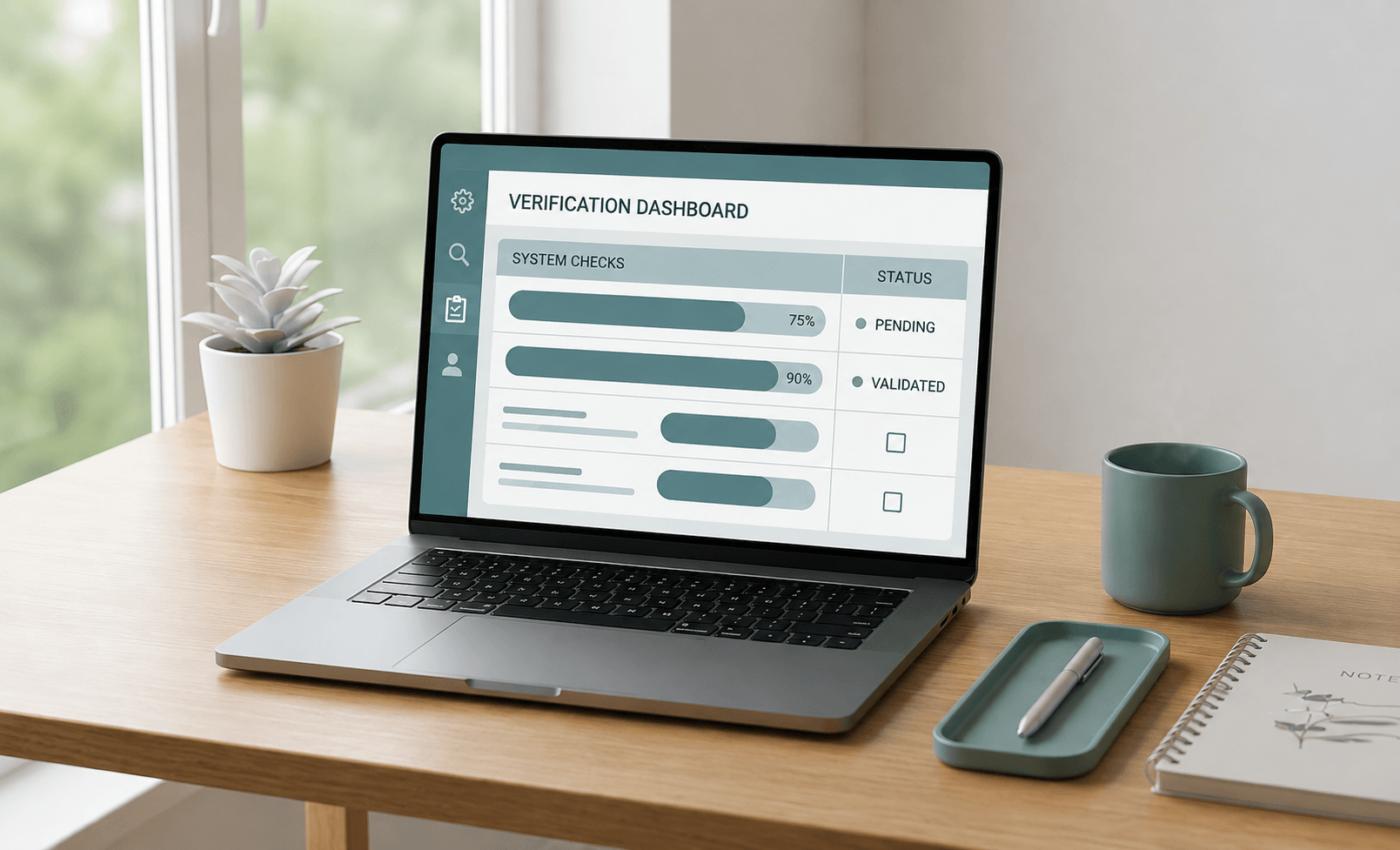
LegitScript reviews a facility’s licensing, clinical oversight, staffing credentials, and marketing practices, and it specifically screens out patient brokering and deceptive claims about outcomes or success rates. Practically, this means a facility running paid search or social ads for addiction treatment in the United States has already passed a layer of scrutiny beyond clinical accreditation. It is not a guarantee of quality on its own, but its absence on a facility that is actively advertising is worth asking about directly.
Checking State Licensing in New Hampshire and Massachusetts
Clinical accreditation and advertising certification both sit on top of a more basic requirement: a valid state operating license. In New Hampshire, substance use disorder treatment programs are certified through the Department of Health and Human Services’ Bureau of Drug and Alcohol Services, and the department maintains a public treatment locator that lists licensed agencies. Families researching care from Northern Massachusetts have a parallel resource: the Massachusetts Department of Public Health’s Bureau of Substance Addiction Services licenses and maintains a searchable directory of approved substance use disorder treatment programs operating in the state.
A facility that cannot produce a current state license, or that operates in a state without one, is a different category of concern entirely from one that simply lacks a national accreditation it hasn’t pursued yet.
Red Flags Worth Taking Seriously
Not every unaccredited facility is predatory, and accreditation is a rigorous, sometimes expensive process that smaller legitimate programs may not have completed yet. But certain patterns are consistently associated with the patient brokering and deceptive marketing schemes that prompted the LegitScript requirement in the first place.
- Guaranteed outcomes or specific success rate claims. Addiction treatment has no ethical basis for promising a cure or a guaranteed recovery rate, and any facility making that claim is overstating what any legitimate provider can honestly say.
- Pressure to decide immediately, especially around insurance information. Being asked for insurance details before any clinical assessment, paired with urgency to commit same-day, is a pattern associated with lead generation operations rather than clinical intake.
- Vague or unverifiable ownership. Legitimate facilities can tell you who operates them and are transparent about their licensing. Difficulty getting a straight answer about who runs the facility is a signal worth taking seriously.

- Marketing language that does not match the facility type. Luxury resort imagery attached to a basic outpatient clinic, or clinical claims that are not backed by any licensed medical staff, are mismatches worth questioning directly.
- No willingness to be checked. A facility that discourages you from verifying its accreditation, certification, or license independently, rather than welcoming the question, is telling you something.
- No flexibility around your schedule. A legitimate outpatient program should be able to explain clearly how its hours work with a job or school schedule. Vague answers about scheduling are worth following up on directly.
None of this means every family needs to conduct a formal audit before making a call. It means the tools to check exist, they are free, and using them takes a few minutes that can matter enormously if something feels off.
A Quick Verification Checklist
Before calling any facility, or right after an initial conversation, these checks take only a few minutes combined and do not require disclosing any personal information:
- Search the facility name at qualitycheck.org to confirm current Joint Commission accreditation status, not just a logo on the website.
- Ask directly whether the facility is LegitScript certified, and note whether the answer is immediate and specific or vague and deflecting.
- Check the relevant state licensing agency, such as New Hampshire’s Bureau of Drug and Alcohol Services or Massachusetts’ Bureau of Substance Addiction Services, for current program certification.
- Notice whether marketing language matches the actual level of care being offered, and question any mismatch directly.
- Ask how evening and weekend scheduling actually works, and whether the answer sounds like a real, tested process or a sales line.
- Pay attention to pacing. A legitimate intake process moves at the family’s pace, not a sales timeline.
None of these steps require confrontation or suspicion as a starting posture. A legitimate facility expects to be checked and will not treat the questions as an inconvenience. For a broader look at what a first conversation and intake should actually feel like, see what to expect from an addiction treatment center in New Hampshire.
How This Applies When You’re Researching Heartfelt
Heartfelt Recovery Centers is Joint Commission accredited and LegitScript certified, and both can be verified independently rather than taken on faith. Heartfelt operates a single outpatient facility at 41 Sagamore Park Road in Hudson, New Hampshire, serving adults across Southern New Hampshire and Northern Massachusetts, with telehealth extending access further. Admissions staff are able to answer direct questions about licensing, ownership, and clinical staffing without hesitation, and evening and weekend Intensive Outpatient Program hours are built specifically so a job or school schedule does not have to be the reason someone delays getting help.
If you are still comparing options, a guide to key factors when choosing an addiction treatment program in New Hampshire covers this same ground from a different angle, and questions about coverage are addressed directly in does insurance cover alcohol rehab in New Hampshire.

Frequently Asked Questions
How do I check if a treatment center is Joint Commission accredited?
Use the Joint Commission’s free public Quality Check tool at qualitycheck.org to search a facility by name and confirm current accreditation status directly, rather than relying on a logo displayed on the facility’s own website.
What is LegitScript certification, and is it the same as accreditation?
LegitScript certification is a separate credential focused on ethical marketing and advertising compliance, required by Google, Meta, and Microsoft Bing for addiction treatment advertisers. It is not the same as clinical accreditation from the Joint Commission, though a legitimate facility can hold both.
Why do addiction treatment centers need special advertising certification?
LegitScript certification became a platform requirement after widespread patient brokering and deceptive advertising scandals in the addiction treatment industry, particularly around 2017 and 2018. It screens out facilities and lead generators involved in paying for patient referrals or making unsubstantiated claims.
Is an unaccredited treatment center automatically untrustworthy?
Not automatically. Accreditation is a rigorous process that some smaller, legitimate programs have not yet pursued. However, a facility that resists being independently verified, or that displays multiple red flags like guaranteed outcomes or pressure tactics, deserves more scrutiny regardless of accreditation status.
How do I check a facility’s state license in New Hampshire or Massachusetts?
New Hampshire’s Department of Health and Human Services, through its Bureau of Drug and Alcohol Services, certifies substance use disorder treatment programs and maintains a public treatment locator listing licensed agencies. In Massachusetts, the Department of Public Health’s Bureau of Substance Addiction Services maintains a similar searchable directory of licensed programs.
Verify, Then Call
Ten minutes of checking accreditation, certification, and licensing is a reasonable step before trusting a treatment center with your family’s most vulnerable moment. Heartfelt Recovery Centers is Joint Commission accredited and LegitScript certified at our Hudson, New Hampshire location, serving families across Southern New Hampshire and Northern Massachusetts with the same evening and weekend scheduling flexibility we’d want if we were the ones searching. Contact our team or verify your insurance to see how the process works firsthand.
WRITTEN BY
Mitchell Cohen, LICSW, MLADC
Licensed Clinical Social Worker, Master Level Alcohol and Drug Counselor
Mitchell Cohen, LICSW, MLADC, is a licensed clinical social worker and Master Level Alcohol and Drug Counselor at Heartfelt Recovery Centers in Hudson, NH. With over 12 years of experience in outpatient addiction treatment, Mitchell specializes in family systems therapy, relapse prevention planning, and dual diagnosis treatment. He is trained in Cognitive Behavioral Therapy (CBT), Dialectical Behavior Therapy (DBT) and holds advanced certifications in family intervention techniques and trauma-informed care.

MD Mitchell Grant Cohen
Dr. Mitchell G. Cohen is a board-certified Internal Medicine specialist with over 34 years of experience in patient-centered healthcare. A graduate of Hahnemann University School of Medicine, Dr. Cohen completed his internship at the University Health Center of Pittsburgh, where he gained invaluable hands-on experience. He is also a certified addiction specialist, holding membership with the American Society of Addiction Medicine (ASAM).
Currently based in Nashua, NH, Dr. Cohen is affiliated with Saint Joseph Hospital, where he provides comprehensive care focusing on both internal medicine and addiction treatment. His expertise includes prevention, diagnosis, and management of adult diseases, as well as specialized care for individuals facing substance use disorders.
Dr. Cohen is committed to fostering open communication, ensuring his patients are fully informed and empowered to make confident decisions about their health and treatment options.