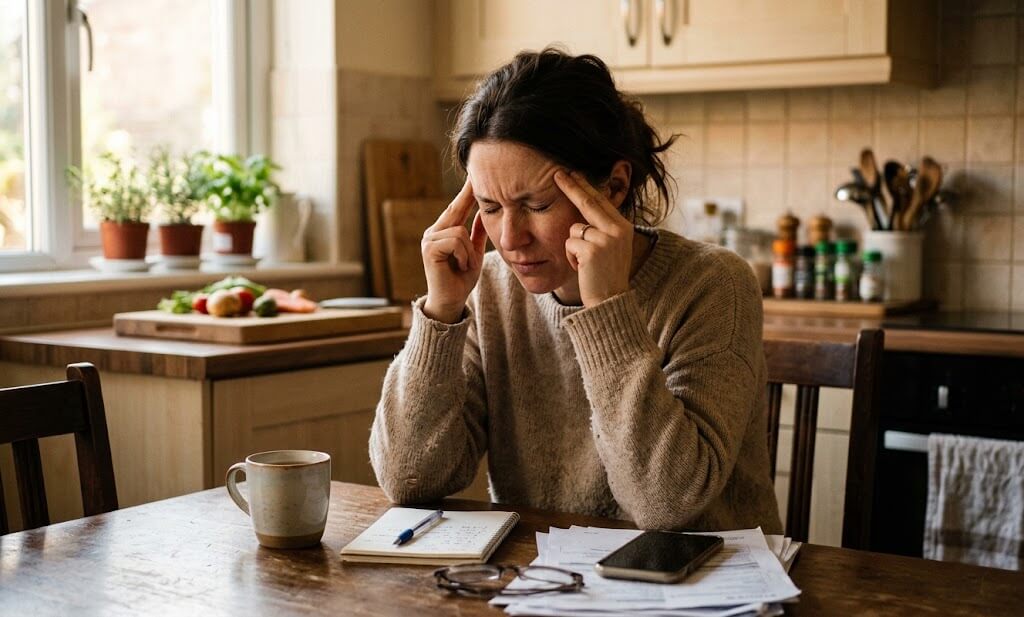

Your doctor prescribed them for anxiety. Maybe for insomnia. For the panic attacks that were making it impossible to function at work or get through a normal day.
Benzodiazepines, medications like Xanax, Klonopin, Ativan, and Valium, are among the most commonly prescribed drugs in the United States. For many people, they provide real relief. And for many of those same people, over time, something shifts.
You start needing more to get the same effect. You feel anxious between doses instead of just before taking them. You’ve tried cutting back and felt shaky, sick, or worse than before. You may have even told yourself, “This was prescribed. This is different.”
It is different in some ways. And in the ways that matter most to your health and safety, it isn’t.
Benzodiazepine dependence is a recognized medical condition. It develops in people who follow their prescriptions exactly as directed, and it develops in people who began misusing the medication. What matters now isn’t how it started. What matters is getting the right support to come through it safely.
This guide explains what benzodiazepine withdrawal actually involves, why it requires medical supervision, and what outpatient treatment in New Hampshire looks like when it’s done right.
What Are Benzodiazepines and Why Does Dependence Develop?
Benzodiazepines are a class of medications that work by enhancing the activity of GABA, a neurotransmitter in the brain that produces a calming effect. They’re effective for short-term anxiety, acute panic, seizure prevention, and alcohol withdrawal management.
The problem is that the brain adapts to their presence. Over time, your nervous system begins relying on the medication to maintain its baseline. When the drug isn’t present, the calming effect disappears, and the system swings in the opposite direction. Anxiety, agitation, insomnia, and physical symptoms emerge. For some people, this can happen after just a few weeks of regular use at prescribed doses.
This is called physiological dependence, and it is not the same as addiction in the behavioral sense. Many people who develop benzodiazepine dependence have no history of substance use and no intention of misusing their medication. They simply took what was prescribed for longer than the brain can handle without adjusting.
Benzodiazepine use disorder, which involves compulsive use despite negative consequences, is a separate clinical diagnosis. Both conditions require professional support. Neither should be addressed alone.
Why You Cannot Just Stop Taking Benzodiazepines
This is one of the most important things to understand, and it’s the reason benzo dependence is medically distinct from most other substance dependencies.
Stopping benzodiazepines abruptly, or cutting the dose too quickly without supervision, can cause life-threatening withdrawal seizures.
Most people are familiar with opioid withdrawal: deeply uncomfortable, but rarely life-threatening for otherwise healthy adults. Benzodiazepine withdrawal is categorically different. Along with alcohol, benzodiazepines belong to a class of substances whose withdrawal can produce grand mal seizures, delirium, and severe neurological complications.
This isn’t meant to frighten you. It’s meant to be honest with you, because understanding this is what makes medically supervised withdrawal management not optional but essential.
A safe taper, gradually reducing the dose under medical guidance, often switching to a longer-acting benzodiazepine to smooth the process, is the standard of care. It takes time. It requires monitoring. And it’s the foundation everything else in your recovery is built on.

What Benzo Withdrawal Symptoms Actually Feel Like
Benzodiazepine withdrawal is not one experience. It varies significantly based on which medication you were taking, how long you’ve been taking it, the dose, and your individual physiology.
That said, there are common patterns:
Early onset: short-acting benzos (Xanax, Ativan) vs. long-acting (Valium, Klonopin)
For shorter-acting benzodiazepines, withdrawal symptoms can begin within hours of the last dose, sometimes as soon as 6 to 24 hours. For longer-acting medications, the onset is delayed, often appearing 2 to 7 days after the last dose as the drug clears more slowly from the body. Common early symptoms include:
- Intense anxiety, often worse than what you were originally treating
- Irritability and difficulty regulating emotions
- Insomnia and vivid, disturbing dreams
- Sweating, tremors, and heart palpitations
- Headaches and muscle tension
Peak withdrawal:
For shorter-acting benzos, peak intensity typically occurs within the first week. For longer-acting medications, symptoms often peak during the first two weeks. During this window:
- The symptoms listed above intensify
- In unsupervised cases, seizure risk is at its highest
- Panic attacks can become frequent
- Some people experience depersonalization or derealization, a sense of unreality or detachment from their own experience
Extended symptoms (weeks to months after the acute phase):
A subset of people who stop benzodiazepines after long-term use experience symptoms that persist well beyond initial withdrawal. This is sometimes called protracted withdrawal. Estimates suggest this occurs in roughly 10 to 15 percent of people who discontinue long-term benzodiazepine use, though the range varies across clinical literature. Common features include intermittent anxiety, disrupted sleep, brain fog, and mood fluctuations. Most people see meaningful improvement within 6 to 18 months, though individual timelines vary. These symptoms are manageable with the right therapeutic support.
How Long Does Benzo Withdrawal Last?
One of the most common questions people search before reaching out for help is: how long does benzodiazepine withdrawal last?
The honest answer is that it depends, and the range is wider than most people expect.
Acute physical withdrawal from shorter-acting benzodiazepines typically resolves within one to two weeks. For longer-acting medications, acute symptoms can extend three to four weeks or more as the drug clears more slowly from the body.
The extended symptom phase described above can persist for several months and, in some cases, longer. These symptoms typically reduce gradually and are manageable with the right therapeutic support and, sometimes, medication-assisted approaches.
What a good treatment program does is help you move through that entire arc, not just the first week.

What Outpatient Benzodiazepine Treatment in New Hampshire Looks Like
Many people assume that treating benzodiazepine dependence requires inpatient hospitalization. For some individuals, particularly those with severe dependence, complex medical histories, or a history of withdrawal seizures, a medically supervised detoxification setting is the appropriate first step.
But inpatient stays aren’t the only path, and they aren’t necessary for everyone.
At Heartfelt Recovery Centers in Hudson, NH, we work closely with patients to coordinate the right level of care for their specific situation. For many people, that means:
Detox placement coordination. If your situation requires medically supervised withdrawal management before stepping down to outpatient care, we help facilitate that. We have relationships with medically supervised detox placement facilities and work with you to make that transition as smooth as possible.
Partial Hospitalization Program (PHP). PHP provides the most intensive outpatient level of care, with programming five days per week that includes medical monitoring, psychiatric support, individual therapy, and group treatment. For people moving out of a detox setting or those with more complex presentations, PHP offers the clinical density needed to stabilize and begin building recovery skills.
Intensive Outpatient Program (IOP). For those who have completed medical stabilization and need structured support while returning to daily life, IOP offers flexible scheduling, including evening sessions designed around work and family commitments. Sessions typically run three to five times per week and include individual therapy, group therapy, and relapse prevention work.
Medication-assisted treatment. Depending on your clinical picture, a prescribing provider may recommend medications to support withdrawal management or address co-occurring anxiety and mood disorders during the recovery process. This is evaluated individually and always managed in coordination with your treatment team.
What all of these share: a personalized care plan. Benzodiazepine dependence develops differently in every person, and the path through it needs to reflect that.
Co-Occurring Conditions: Anxiety, Sleep Disorders, and Dual Diagnosis
A significant portion of people who develop benzodiazepine dependence were originally prescribed the medication for an underlying mental health condition, most commonly anxiety, panic disorder, PTSD, or insomnia.
This creates a clinical complexity that matters enormously for treatment: you can’t successfully stop benzodiazepines without also addressing the condition they were managing.
At Heartfelt, we specialize in dual diagnosis treatment, which means we treat substance use and mental health conditions together, not separately. When a person’s anxiety is addressed through evidence-based therapies like Cognitive Behavioral Therapy (CBT) and Dialectical Behavior Therapy (DBT), and when sleep issues are addressed through appropriate clinical support, the underlying need that benzodiazepines were filling begins to be met in healthier ways.
Recovery from benzodiazepine dependence isn’t just about getting the medication out of your system. It’s about building the internal and external resources to feel safe, stable, and functional without relying on them.
“But My Doctor Prescribed This.” You’re Not Alone in Feeling That Way.
One of the quieter struggles many people face with benzodiazepine dependence is identity. It doesn’t feel like what they imagined addiction looks like. There’s often shame layered with confusion: “I did what I was told. How did I end up here?”
You don’t need to resolve that question before reaching out for help. What happened to your nervous system is a medical reality, not a moral failing. Many people who come to Heartfelt for benzodiazepine treatment are healthcare workers, teachers, parents, and executives, people who followed medical advice and found themselves in a situation they didn’t anticipate.
Person-first language isn’t just a style choice here. It reflects something true: you are a person navigating a complicated medical situation, not a category.

What Taking the First Step Actually Looks Like
If you’re reading this, something has already shifted. Maybe you’ve tried to cut back. Maybe someone who loves you said something that landed differently than usual. Maybe you’re just tired.
You don’t have to have everything figured out before calling. You don’t have to know which level of care is right for you, or how to manage your current prescription, or how to tell your employer. Those are questions we help answer together.
Here’s what a first conversation with Heartfelt looks like:
A compassionate admissions team member will talk with you about what you’re experiencing. They’ll ask about your current medication, your history, and your life situation. They’ll help you understand what level of care makes clinical sense for your circumstances. They’ll verify your insurance. And they’ll explain every step before it happens.
No pressure. No judgment. Just information and someone in your corner.
Benzodiazepine dependence is treatable. People come through it every day and rebuild lives that are more stable, more present, and more their own than they were when the medication was running the show.
You don’t have to do this alone. And you don’t have to keep waiting.
Ready to take the next step? Contact Heartfelt Recovery Centers in Hudson, NH, at (603) 207-1633 or verify your insurance online to get started today. Our admissions team is available and ready to help you understand your options for benzodiazepine addiction treatment in New Hampshire.
Heartfelt Recovery Centers is a Joint Commission-accredited, LegitScript-certified outpatient addiction treatment center located at 41 Sagamore Park Road, Hudson, NH, serving New Hampshire and Massachusetts. We specialize in personalized, evidence-based treatment for substance use and co-occurring mental health conditions.
Related Reading
- What Is a Partial Hospitalization Program (PHP)?
- Medical Detoxification Placement Services
- Medication-Assisted Treatment at Heartfelt
- When Addiction and Mental Health Need Treatment Together
- Dual Diagnosis vs. Co-Occurring Disorders: What’s the Difference?
- How Long Is PHP Treatment?

MD Mitchell Grant Cohen
Dr. Mitchell G. Cohen is a board-certified Internal Medicine specialist with over 34 years of experience in patient-centered healthcare. A graduate of Hahnemann University School of Medicine, Dr. Cohen completed his internship at the University Health Center of Pittsburgh, where he gained invaluable hands-on experience. He is also a certified addiction specialist, holding membership with the American Society of Addiction Medicine (ASAM).
Currently based in Nashua, NH, Dr. Cohen is affiliated with Saint Joseph Hospital, where he provides comprehensive care focusing on both internal medicine and addiction treatment. His expertise includes prevention, diagnosis, and management of adult diseases, as well as specialized care for individuals facing substance use disorders.
Dr. Cohen is committed to fostering open communication, ensuring his patients are fully informed and empowered to make confident decisions about their health and treatment options.