

You’re navigating recovery from addiction. You’re also navigating a world that doesn’t always affirm your identity. That’s a double burden no one should have to carry alone.
You’re not broken. Your identity isn’t the problem. Addiction doesn’t discriminate, but treatment environments often do. You deserve care that sees, celebrates, and addresses all of who you are. This Pride Month, let’s talk about what LGBTQ-affirmative addiction treatment looks like and why it matters.
Why LGBTQ+ Substance Use Disparities Exist
LGBTQ+ adults are more than twice as likely to use illicit drugs and nearly twice as likely to have a substance use disorder compared to heterosexual adults. Lesbian, gay, and bisexual adults show significantly higher rates across all categories: alcohol use disorder (17.9% vs. 10.3%), cannabis use disorder (13.0% vs. 4.7%), nicotine dependence (16.1% vs. 10.7%), and prescription opioid misuse (8.6% vs. 3.9%).
An estimated 20-30% of LGBTQ+ individuals struggle with substance use, compared to 9% of the general population (American Addiction Centers 2024). For transgender individuals, the rates are equally concerning. LGBTQ+ youth face even higher risks than LGBTQ+ adults and significantly higher than their heterosexual peers.
These aren’t just statistics. They’re people. People who’ve been told their love is wrong, their identity is invalid, and their existence is debatable. These numbers represent real human beings coping with a society that too often rejects who they are.
Minority Stress Theory: The Weight of Living in a Non-Affirming World
Minority stress theory explains why these disparities exist. LGBTQ+ individuals experience chronic stress from living in a society that stigmatizes their identities. This isn’t occasional stress. It’s daily, cumulative, exhausting stress from discrimination, harassment, microaggressions, and violence.
The stress comes from external sources (distal stressors): workplace discrimination, family rejection, religious condemnation, legislative attacks on LGBTQ+ rights, hate crimes, and the constant vigilance required to assess whether it’s safe to be out in any given situation.
It also comes from internal sources (proximal stressors): internalized homophobia or transphobia, hiding your identity, anticipating rejection, and the cognitive load of managing how much of yourself to reveal in different contexts.
Substances provide temporary relief from this relentless stress. Alcohol quiets the hypervigilance. Cannabis dulls the pain of rejection. Stimulants provide energy when depression makes getting out of bed feel impossible. The problem is that substances stop working. They create their own problems. The temporary relief becomes long-term addiction.
Family Rejection and Social Isolation
Family rejection of LGBTQ+ identity is a significant risk factor for substance use. When you come out and your family responds with rejection, conditional love, or attempts to change you, you lose your primary support system. Some LGBTQ+ individuals experience complete estrangement. Others maintain relationships but with the understanding that their identity is never discussed, their partners are never acknowledged, and a fundamental part of who they are remains invisible.
Social isolation compounds the risk. If you’ve lost family, haven’t found community, or live in an area with limited LGBTQ+ visibility, loneliness becomes unbearable. Substances fill the void that human connection should occupy.
Historically, bars and clubs were among the few safe spaces for LGBTQ+ people to gather. While progress has created more affirming spaces, socialization within the LGBTQ+ community often still centers around alcohol and substance use. This makes recovery more challenging because the social spaces where you feel safe and accepted may be the same spaces where substances are present.
Trauma and Violence
LGBTQ+ individuals experience higher rates of physical assault, sexual violence, and intimate partner violence compared to heterosexual and cisgender people. Childhood bullying, school violence, rejection-based trauma, and for some, the trauma of conversion therapy create lasting psychological wounds.
Trauma and addiction are deeply intertwined. Many people use substances to manage PTSD symptoms: intrusive memories, hypervigilance, emotional numbing, and sleep disruption. Without addressing the underlying trauma, addiction treatment often fails because the pain that drove initial use remains unaddressed.
Co-Occurring Mental Health Conditions
Mental health conditions and substance use disorders frequently co-occur in LGBTQ+ populations. Depression, anxiety, and PTSD are all more common among LGBTQ+ individuals, driven by the same minority stress that increases substance use risk.
According to the Trevor Project (2022), individuals with substance use disorders are seven times more likely to die by suicide than those without. For LGBTQ+ youth specifically, regular prescription drug misuse increases suicide attempt odds by 2.98 times. Regular alcohol use increases suicide attempt odds by 1.62 times for youth under 21.
SAMHSA data shows that among LGB adults with substance use disorders, nearly two-thirds involve alcohol combined with mental health struggles (SAMHSA 2020). Depression doesn’t just co-occur with addiction. It drives it, worsens it, and makes recovery without mental health treatment nearly impossible.

Barriers That Keep LGBTQ+ People from Seeking Treatment
Understanding why LGBTQ+ individuals have higher substance use disorder rates is only part of the picture. Understanding why they delay or avoid treatment is equally important.
Fear of Discrimination
If you’ve experienced discrimination in healthcare settings before, you approach treatment with well-founded caution. Will the intake form have space for your chosen name and pronouns? Will staff members gender you correctly? Will other clients make comments about your identity? Will religious-based treatment programs view your identity as something to “fix” alongside addiction?
These aren’t hypothetical concerns. Many LGBTQ+ individuals have experienced healthcare discrimination. That history creates barriers to seeking treatment even when you desperately need help.
Invisibility in Treatment Programs
Many addiction treatment programs claim to be “welcoming to everyone” without actually creating affirming environments. They don’t train staff on LGBTQ+ competence. They don’t have representation in their materials or staff. They assume everyone is heterosexual and cisgender unless proven otherwise.
Gender-segregated treatment programs create particular challenges for transgender and non-binary individuals. Being placed in a program based on sex assigned at birth rather than gender identity is invalidating and potentially unsafe. Being excluded entirely is also common.
When your identity is invisible in the treatment environment, you expend energy hiding, explaining, or defending who you are instead of focusing on recovery. That’s not conducive to healing.
Treatment That Ignores LGBTQ-Specific Needs
Standard addiction treatment may address general triggers and coping skills, but if it doesn’t address minority stress, family rejection trauma, coming out processes, or identity-specific relationship dynamics, it misses critical factors driving your substance use.
For transgender individuals, coordinating addiction treatment with gender-affirming care (hormone therapy and surgical recovery) is essential. Treatment that doesn’t accommodate these medical needs or, worse, that frames gender dysphoria as a psychiatric problem to “treat” alongside addiction creates harm rather than healing.
Financial and Access Barriers
LGBTQ+ individuals face higher rates of employment discrimination, which leads to financial instability and insurance gaps. In rural areas like parts of New Hampshire, finding LGBTQ-affirming providers of any kind can be challenging. The combination of financial barriers and geographic isolation creates significant access issues.
Past Trauma From “Treatment”
Some LGBTQ+ individuals have experienced conversion therapy, which attempts to change sexual orientation or gender identity. This practice, condemned by every major medical and mental health organization, causes significant psychological harm. If your previous experience with “treatment” involved being told your identity was the problem, approaching addiction treatment understandably triggers fear and resistance.
What LGBTQ-Affirmative Addiction Treatment Actually Means
There’s a crucial distinction between tolerant care, neutral care, and affirmative care.
Tolerant care says “we allow LGBTQ+ people.” This is the bare minimum. It often involves coded discrimination: you’re allowed, but don’t expect us to understand your identity, use your pronouns consistently, or address identity-related issues in treatment.
Neutral care says “we treat everyone the same.” This sounds positive but actually erases identity. Treating everyone the same ignores that LGBTQ+ individuals have specific experiences, traumas, and needs related to their identities. Neutral care is inadequate care.
Affirmative care says “we see, celebrate, and address the specific needs of LGBTQ+ individuals.” Affirmative care actively validates your identity as an integral part of who you are and integrates identity-related factors into treatment planning.
Identity Respect: The Foundation
Affirmative care starts with basic respect. This means:
Asking for and using correct pronouns. Not assuming pronouns based on appearance. Asking at intake (“What pronouns do you use?”) and using them consistently throughout treatment. Correcting mistakes immediately without making you educate or comfort the staff member who made the error.
Using chosen names, not deadnames. Your chosen name is your name, regardless of what appears on your insurance card or legal documents. Documentation should reflect your actual identity, not your legal name if they differ.
Gender-neutral intake forms. Forms that don’t assume binary gender or heterosexuality. Questions about partners that use “partner” or “spouse” language rather than boyfriend/girlfriend or husband/wife. Options for gender identity beyond male/female checkboxes.
Staff training on LGBTQ+ terminology and etiquette. Staff who understand the difference between sexual orientation and gender identity, who know what terms are current and respectful, and who don’t ask invasive questions about your identity, body, or relationships.
Creating an Inclusive Environment
Affirmative care isn’t just about individual interactions. It’s about the environment communicating safety.
LGBTQ+ representation in marketing materials. Photos, language, and examples that reflect diverse gender expressions, relationship structures, and identities. Pride flags displayed visibly, not hidden away.
Gender-neutral restrooms. Single-stall or all-gender restrooms that don’t require you to choose a gendered space that may not align with your identity.
Visible non-discrimination policies. Clear statements that discrimination based on sexual orientation, gender identity, and gender expression is prohibited and will result in consequences.
LGBTQ+ staff members when possible. Representation matters. Seeing openly LGBTQ+ staff members signals that this is a safe space.
Addressing Minority Stress in Treatment
Affirmative care acknowledges that living in a non-affirming society causes real psychological harm. Therapy must address minority stress as a form of trauma, not dismiss it as “sensitivity” or “playing the victim.”
This means:
Validation that identity-related stress is real and legitimate. You’re not overreacting. Discrimination is traumatic. Family rejection is painful. The fear of violence is exhausting. These experiences deserve space in treatment.
Skills for coping with ongoing discrimination. Because even in recovery, discrimination doesn’t stop. You need skills for managing microaggressions, setting boundaries with non-affirming family members, and building resilience without substances.
Processing internalized homophobia or transphobia. Many LGBTQ+ individuals internalize the messages society sends about their identities being wrong, sinful, or disordered. This internalized shame drives substance use and sabotages recovery. Dual diagnosis therapy must address these internalized beliefs.
Family-of-Origin Work and Chosen Family
Family therapy in affirmative care recognizes diverse family structures. Your partner of any gender is welcome. Your chosen family members are family, regardless of biological or legal relationships.
For those experiencing family rejection, treatment addresses that specific trauma. For those navigating complicated family relationships where acceptance is partial or conditional, family therapy provides support for setting boundaries and managing those dynamics.
For those in the coming out process during treatment, affirmative care provides support without pressure. Coming out is your choice, on your timeline. Treatment should support whatever decision you make about disclosure.
Relationship and Intimacy Issues
Affirmative care addresses relationships without heteronormative assumptions. This means recognizing that LGBTQ+ relationship dynamics may differ from straight relationships. Power dynamics, intimacy concerns, sexual health discussions, and relationship structures (including consensual non-monogamy) are addressed with understanding rather than judgment.
Dating in early recovery as an LGBTQ+ person presents unique challenges. If you met previous partners in bars or clubs, you need strategies for meeting people in sober spaces. If your identity affects where and how you can date safely, treatment should address these practical concerns.
Co-Occurring Mental Health Treatment
LGBTQ-affirmative care screens for trauma, depression, anxiety, and PTSD with understanding of how minority stress contributes to these conditions. Medication management respects hormone therapy regimens for transgender individuals. Providers coordinate with LGBTQ-affirming mental health specialists and medical providers.
Understanding suicide risk is critical. LGBTQ+ youth, especially transgender youth, face significantly elevated suicide risk. Treatment must take this seriously without pathologizing identity.
Building Peer Support and Community
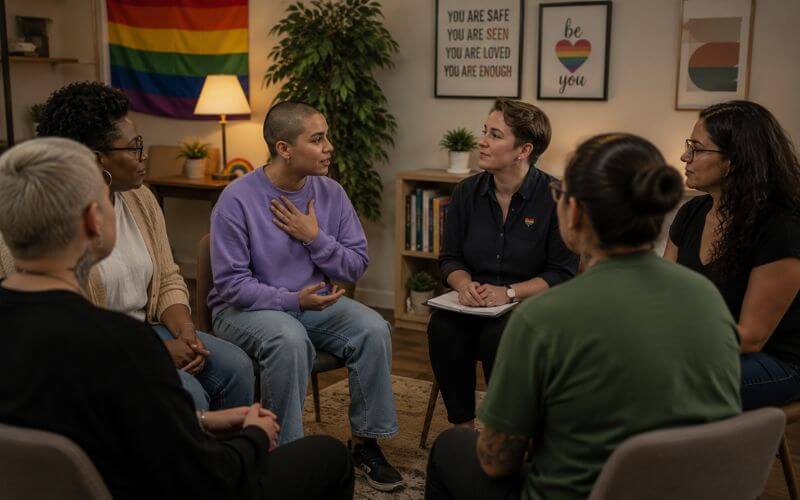
Isolation increases relapse risk. Affirmative care helps you connect with LGBTQ+ recovery communities. When group size permits, LGBTQ-specific groups provide space to address identity-related issues with peers who understand. In mixed groups, staff intervene immediately if discrimination occurs.
Connection to wider LGBTQ+ sober communities is part of aftercare planning. You need sober spaces where your identity is affirmed and celebrated, not tolerated or ignored.
Transgender-Specific Care
For transgender individuals, affirmative care coordinates with gender-affirming care providers. Hormone therapy regimens are maintained. Gender dysphoria is understood as distinct from addiction, not confused with it.
Support around medical transition in recovery is provided. If you’re pursuing gender-affirming surgery, treatment accommodates recovery time and addresses emotional aspects of transition.
Staff understands that misgendering causes distress and harm. Consistent use of the correct name and pronouns isn’t optional. It’s essential to creating a safe healing environment.
Questions LGBTQ+ Individuals Often Have About Treatment
“Will I be the only LGBTQ+ person in treatment?”
This depends on timing and program size. Heartfelt serves a diverse population, but we can’t guarantee other LGBTQ+ individuals will be in your specific group at your specific time. What we can guarantee is that your identity will be respected and affirmed regardless of who else is in treatment. Individual therapy provides space for identity-specific work. We also help you connect with the broader LGBTQ+ recovery community in New Hampshire and Massachusetts.
“What if other clients are homophobic or transphobic?”
We have a zero-tolerance policy for discrimination of any kind. If another client makes discriminatory comments or behaves in ways that create an unsafe environment, staff intervene immediately. Creating a safe therapeutic space is our responsibility. You should never have to educate other clients about basic respect or defend your right to exist.
“Can I bring my partner to family therapy?”
Absolutely. Partners of all genders are welcome in family therapy. We recognize diverse family structures and relationship configurations. Family therapy at Heartfelt is about the people who matter to you, not narrow definitions of family. Your chosen family is your family.
“Will I have to come out in treatment?”
Coming out is always your choice. We create space for clients who want to process coming out or who are navigating family reactions to disclosure. We also respect privacy for clients who aren’t out in all contexts or who are still figuring out their identity. You control how much you share and with whom.
“What about hormone therapy, PrEP, or other medications?”
We coordinate with your prescribing providers. Medication management at Heartfelt respects gender-affirming care and doesn’t interfere with hormone therapy regimens. If you’re taking PrEP for HIV prevention or are managing HIV with medication, this is integrated into your overall health plan. Your medical care is coordinated, not disrupted.
“Do I have to go to AA or NA if they’re not LGBTQ-friendly?”
LGBTQ-specific 12-step meetings exist in New Hampshire and Massachusetts. We help you find them. We also recognize that 12-step recovery isn’t the only path. Alternative approaches like SMART Recovery, Refuge Recovery, and secular recovery programs are options. We help you build recovery support that feels safe and affirming to you.
LGBTQ-Affirmative Care at Heartfelt Recovery Centers
Heartfelt Recovery Centers is committed to providing LGBTQ-affirmative addiction treatment. Here’s what that means in practice:
Non-discrimination policy: We explicitly prohibit discrimination based on sexual orientation, gender identity, and gender expression. This policy is communicated to all clients and enforced consistently.
Pronoun respect: We ask for your pronouns at intake and use them consistently throughout treatment. All staff are trained on pronoun usage and the importance of getting this right.
Inclusive language: Our forms, materials, and communication use gender-neutral and inclusive language. We recognize diverse identities, relationship structures, and family configurations.
Staff training: Clinical staff receive training on LGBTQ+ cultural competence, minority stress, trauma-informed care, and creating affirming environments. This isn’t one-time training. It’s ongoing education.
Trauma-informed lens: We understand minority stress as a form of trauma. Our trauma therapy approaches address discrimination, family rejection, and identity-related trauma as legitimate psychological wounds requiring treatment.
Family inclusion: Partners and chosen family members are welcomed into family therapy. We work with the people who matter to you, regardless of legal or biological relationships.
Coordinated care: We work with LGBTQ-affirming medical and mental health providers to ensure your care is comprehensive. If you have other healthcare needs related to your identity, we coordinate rather than complicate your care.
Connection to community: We help you connect with LGBTQ+ recovery resources, support groups, and community organizations in New Hampshire and Massachusetts.
Commitment to continuous improvement: We know we won’t get everything perfect. We’re committed to learning, growing, and improving our affirmative care practices. Feedback from LGBTQ+ clients helps us do better.
LGBTQ+ Recovery and Support Resources in New Hampshire and Massachusetts
LGBTQ-Specific Recovery Meetings:
- Sobriety Centers of New Hampshire (Laconia): Offers LGBTQ-specific support groups within addiction treatment programming
- Online LGBTQ+ recovery meetings: Available through AA, NA, and SMART Recovery platforms (search “LGBTQ online meetings”)
- Boston Area: “Out & Sober” LGBTQ+ AA meetings and other affirming 12-step groups (check Boston AA Intergroup website)
Mental Health and Crisis Resources:
- 988 Suicide & Crisis Lifeline: Call or text 988 (24/7, LGBTQ-trained counselors available)
- Trevor Lifeline (LGBTQ+ youth under 25): 1-866-488-7386 or text START to 678678
- Trans Lifeline (peer support for transgender individuals): 1-877-565-8860
- Crisis Text Line: Text HOME to 741741
New Hampshire Community Organizations:
- PFLAG New Hampshire: Support for LGBTQ+ individuals, families, and allies (pflagnh.org)
- Outright NH: Youth services and support for LGBTQ+ young people
- NAMI New Hampshire: LGBTQIA+ mental health resources (naminh.org)
- Seacoast Outright: NH/MA border region youth services (ages 13-19)
Massachusetts Community Organizations:
- Fenway Health (Boston): Comprehensive LGBTQ+ healthcare including mental health and addiction services
- The Network/La Red: LGBTQ+ intimate partner violence support and resources
- Boston GLASS: GLBT Alcoholics and Substance Abusers Support Services
- Massachusetts Transgender Political Coalition: Advocacy and resources for transgender individuals
National Resources:
- SAMHSA National Helpline: 1-800-662-HELP (4357) – Confidential, free, 24/7 treatment referral service
- National LGBT Health Education Center: Resources and provider directories (lgbthealtheducation.org)
- GLBTQ Legal Advocates & Defenders (GLAD): New England legal advocacy and resources
Recovery Is Possible, and You Don’t Have to Choose Between Identity and Healing
Pride Month is about celebration. It’s also about visibility, advocacy, and recognizing that LGBTQ+ individuals still face significant challenges. Substance use disorder disparities are one of those challenges.
You deserve addiction treatment that sees all of who you are. Your sexual orientation, gender identity, and the experiences that come with living as an LGBTQ+ person in a world that isn’t always affirming are relevant to your recovery. They’re not separate from your addiction. They’re part of the context that drives it, and they must be part of the treatment that addresses it.
LGBTQ-affirmative care isn’t a luxury. It’s not political correctness or special treatment. It’s evidence-based, culturally competent care that recognizes the specific factors affecting LGBTQ+ individuals and addresses them effectively. Research shows that affirmative care leads to higher treatment completion rates, lower relapse rates, and better long-term outcomes compared to standard care that ignores identity (National LGBT Health Education Center 2024).
You don’t have to choose between your identity and your recovery. You can be proudly LGBTQ+ and proudly sober. You can heal from addiction while celebrating who you are. Affirmative treatment helps you do both.
If you’re LGBTQ+ and struggling with substance use, call Heartfelt Recovery Centers at 603-207-1633 for a free, confidential assessment. Our flexible Intensive Outpatient Program accommodates work and life responsibilities with evening and weekend sessions. Our Partial Hospitalization Program provides higher-intensity care while maintaining your daily connections. We accept most insurance plans. Verify your coverage here to understand your benefits.
Recovery is possible. You deserve care that affirms your identity while addressing your addiction. You deserve to be seen, respected, and supported. Happy Pride Month.
Frequently Asked Questions
Will my therapist understand LGBTQ+ issues?
All Heartfelt clinical staff receive training on LGBTQ+ cultural competence and affirmative care. We understand minority stress, family rejection trauma, and identity-related factors affecting recovery. If you have specific concerns or preferences (for example, wanting an LGBTQ+ therapist if available), communicate that during your assessment and we’ll do our best to accommodate.
Can I use my chosen name even if it’s not my legal name?
Yes. We use your chosen name in all clinical settings, even if it differs from your legal name for insurance purposes. Your chosen name is your name. Legal names are only used for billing and insurance documentation where legally required.
What if I’m not out to my family yet?
Your disclosure is your choice. We respect your privacy. If you’re not out to family members and they’re involved in any way (paying for treatment, providing transportation, etc.), we coordinate with you about what information is shared and how. You control your own coming out process.
Do you have gender-neutral restrooms?
Yes. We provide gender-neutral restroom options to ensure all clients can use facilities that align with their comfort and identity.
How do you handle other clients who might not be affirming?
We have explicit non-discrimination policies that all clients agree to upon admission. If discriminatory behavior occurs, staff intervene immediately. We take creating a safe environment seriously. Other clients’ lack of understanding or acceptance is never your problem to manage. It’s our responsibility to address it.
What if I need medical detox before starting outpatient treatment?
We coordinate detox placement services with LGBTQ-affirming medical detoxification facilities. We ensure your identity is respected throughout the entire continuum of care, from detox through outpatient treatment and aftercare.
About the Author
Mitchell Cohen, LICSW, MLADC, is a licensed clinical social worker and Master Level Alcohol and Drug Counselor at Heartfelt Recovery Centers in Hudson, NH. With over 12 years of experience in outpatient addiction treatment, Mitchell specializes in family systems therapy, relapse prevention planning, and dual diagnosis treatment. He is trained in Cognitive Behavioral Therapy (CBT) and Dialectical Behavior Therapy (DBT) and holds advanced certifications in family intervention techniques and trauma-informed care.