
Does HHC show up on a drug test? It can, and often does. If you picked up an HHC product at a shop or ordered it online in New Hampshire, the label may have suggested it was a safe workaround for a screening. A pre-employment test or a random school screen is a hard moment to learn otherwise. Here is what the research shows, in plain language.
- HHC often triggers a positive result on standard THC urine screens because the screening antibodies react to HHC metabolites.
- A follow-up confirmation test looks for specific compounds and may not confirm THC. A presumptive positive can still raise questions with an employer or school while results are pending.
- No standardized detection window exists for HHC. How often you use it matters most.
- The DEA gave HHC its own Schedule I listing in 2026, and a broader federal hemp redefinition takes effect November 12, 2026.
A Product Marketed as a Loophole
HHC, short for hexahydrocannabinol, spread through shops and online stores as a hemp-derived alternative to THC. The pitch was simple: similar effects, a different legal category, and supposedly nothing to worry about on a drug screen. For many young adults and college students, that pitch sounded like a reasonable workaround.
The marketing and the chemistry never lined up. People across New Hampshire and beyond have learned that right before a pre-employment screening or a random test at school. If a screening has you rethinking your use, treatment designed for working professionals is available with flexible scheduling at Heartfelt Recovery Centers.
Why HHC Often Triggers a Positive Test
Yes, HHC can show up on a standard THC drug test. Most urine screens use antibodies that react to a major THC metabolite, and a 2023 study of six commercial urine immunoassays found they detect HHC metabolites with varying sensitivity depending on the assay and cutoff (Journal of Analytical Toxicology, 2023). Because the screen cannot separate the two, a presumptive positive is common even when the product was labeled HHC and not THC.
That similarity is not a coincidence. HHC is made by chemically altering THC or CBD-derived compounds in a lab, a process called hydrogenation. The result is close enough to THC that a screen built to catch THC use does not need to look for HHC by name to flag it. In a 2024 study of blood samples from impaired-driving cases, one ELISA screen cross-reacted at 120% for one HHC metabolite and 48% for another (Journal of Analytical Toxicology, 2024).
Products like HHC also belong to a larger conversation about cannabis use. Our marijuana and cannabinoid addiction treatment page explains how care for regular use works and what to expect.
HHC vs. THC on a Drug Test
Most workplace and legal drug screens do not search for a single named chemical. They look for a family of related metabolites that show up after cannabinoid use.
Standard Immunoassay Panels
These are the most common and most affordable tests, used for pre-employment and random screening. They are built to detect THC metabolites, not HHC specifically, which is why HHC use can produce a positive THC result. Results from these screens are presumptive, meaning they signal that a sample needs a closer look.
Confirmation Testing
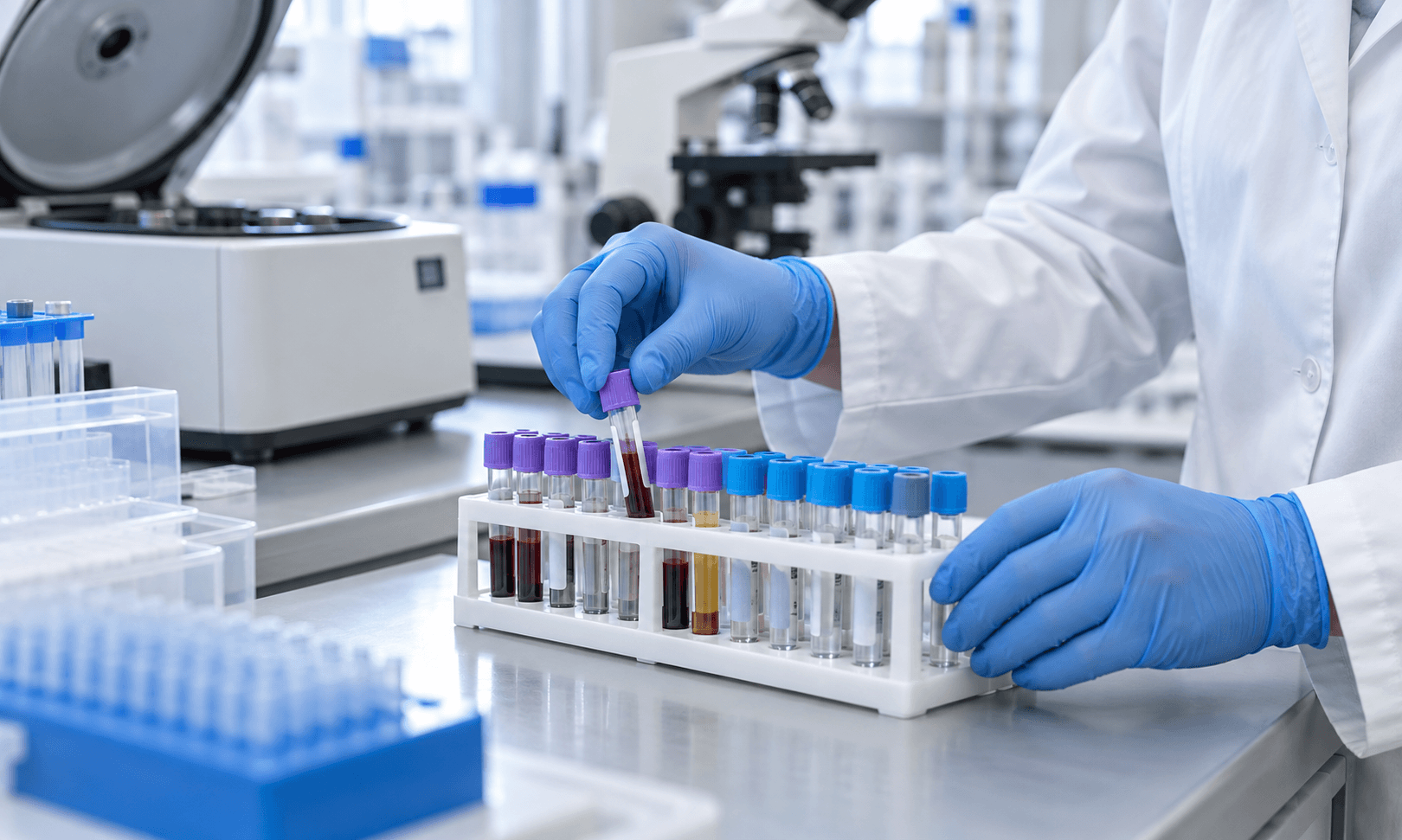
Many employers and labs send a presumptive positive to confirmation testing, typically gas or liquid chromatography paired with mass spectrometry. These methods identify specific compounds. A Swedish clinical lab reported urine samples that screened positive on a THC immunoassay but did not confirm for THC, and 44 of the 46 samples it examined contained HHC metabolites (Scandinavian Journal of Clinical and Laboratory Investigation, 2024).
That does not guarantee a smooth outcome. Some labs can now look for HHC metabolites directly, and whether an employer or school treats that as a violation depends on its own policy. The screen alone can still lead to retesting, questions, or a difficult conversation.
How Long HHC Stays in Your System
There is no established detection window for HHC. Published human data comes from small studies with short follow-up, so no one can give a reliable number of days that applies to everyone. What is known is directional, based on how related cannabinoids behave:
- Test type: Blood and oral fluid generally reflect more recent use, urine covers a longer stretch, and hair looks back the furthest.
- Frequency of use: Regular, heavier use generally extends detection compared with a single occasion.
- Individual factors: Metabolism and body composition can shift timelines from person to person.
Oral fluid tests are common in workplace and roadside settings, and our mouth swab drug test guide explains how they work.
Legal Doesn’t Mean Test Safe, and the Rules Are Shifting
Many people bought HHC because it was sold as a legal hemp product. That reasoning has weakened. In May 2026, the DEA published a final rule giving HHC its own Schedule I listing and drug code, effective May 4, 2026, stating that HHC was already controlled as a tetrahydrocannabinol (Federal Register, 2026). Hemp industry groups dispute how federal law treats hemp-derived cannabinoids, so the legal picture is still contested.
A second change is coming. A federal law signed in November 2025 redefines hemp and excludes cannabinoids made through chemical conversion. Those provisions take effect November 12, 2026 (H.R. 5371, 2025). State rules vary, so check current state law instead of relying on a product label.
Legal status aside, quality is a separate problem. Unlike regulated cannabis sold through licensed dispensaries, many HHC products have no consistent standard for purity or potency, so what is on the label may not match what is inside. If you came across HHC believing it was a safer, more reliable choice, that assumption deserves a second look.

When Regular Use Becomes Something to Address
For some people, HHC use stays occasional. For others, especially those using it to manage stress, sleep, or anxiety, it can become a regular habit that is harder to step back from than expected. If you notice you are using it daily, feeling irritable without it, or finding it harder to focus or sleep without it, that is worth paying attention to. Not out of judgment, but because those patterns are the early signs treatment providers look for.
Heartfelt Recovery Centers is a Joint Commission-accredited outpatient program serving New Hampshire and Massachusetts. For people managing anxiety or stress alongside cannabinoid use, dual diagnosis treatment addresses both at the same time, instead of treating one and ignoring the other.
Our intensive outpatient program offers flexible scheduling, so care can fit around school or work.

Frequently Asked Questions
Does HHC show up on a drug test?
Often, yes. Standard immunoassay screens, the kind used for employment and legal testing, can react to HHC metabolites and return a presumptive positive for THC. A follow-up confirmation test may or may not match, depending on what the lab looks for.
How long does HHC stay in your system?
There is no established window. Human research on HHC is limited, and detection depends on the test type, how often you use it, and individual factors. Regular use generally extends detection.
Is HHC the same as THC?
Not exactly, but they are close relatives. HHC is created by chemically modifying THC or CBD-derived compounds, and it produces similar effects. Many screening tests cannot reliably tell the two apart.
Can a drug test tell HHC apart from THC?
Standard immunoassay screens cannot. Confirmation methods such as chromatography with mass spectrometry can identify specific compounds, and some labs now test for HHC metabolites directly.
Is HHC legal right now?
Federal status is contested. The DEA gave HHC its own Schedule I listing in a May 2026 rule, saying it was already controlled, and a broader federal hemp redefinition takes effect November 12, 2026. State laws vary, so confirm current rules before assuming a product is legal.
What should I do if I’m using HHC regularly and want to stop?
Start by being honest with yourself about how often you use it and why. If stopping feels harder than expected, or you are using it to manage anxiety, stress, or sleep, a licensed treatment provider can help you understand your options. Heartfelt Recovery Centers is Joint Commission accredited and offers outpatient care built around school and work.
Ready for a Clearer Answer Than a Label Can Give You
If an HHC product put you in an unexpected spot, or you are realizing your use has grown into more than you intended, you do not have to sort it out alone. Our New Hampshire team can help you verify your insurance and talk through what support could look like for you. Call (603) 207-1633 for a confidential conversation. We take calls 24/7.

MD Mitchell Grant Cohen
Dr. Mitchell G. Cohen is a board-certified Internal Medicine specialist with over 34 years of experience in patient-centered healthcare. A graduate of Hahnemann University School of Medicine, Dr. Cohen completed his internship at the University Health Center of Pittsburgh, where he gained invaluable hands-on experience. He is also a certified addiction specialist, holding membership with the American Society of Addiction Medicine (ASAM).
Currently based in Nashua, NH, Dr. Cohen is affiliated with Saint Joseph Hospital, where he provides comprehensive care focusing on both internal medicine and addiction treatment. His expertise includes prevention, diagnosis, and management of adult diseases, as well as specialized care for individuals facing substance use disorders.
Dr. Cohen is committed to fostering open communication, ensuring his patients are fully informed and empowered to make confident decisions about their health and treatment options.